
Garhen Avalokiteshvara
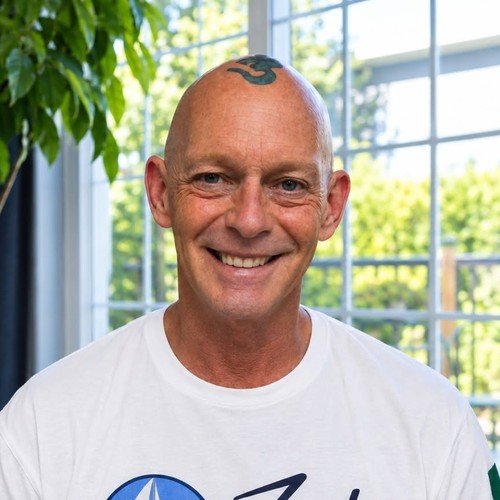
2026 Election Candidate
Environmental
Policies in the Armstrong Official Community Plan "direct future growth strategically to protect ecological and agricultural areas, offer more housing and transportation choices, support economic prosperity and diversity, prioritize sustainable municipal infrastructure planning, enhance community wellbeing, and support our transition to a more sustainable and climate resilient community." Please give local examples of 'good' and 'not good' building development in Armstrong, and state why. Do you support the downtown revitalization plan for Armstrong and why/why not?
The City of Armstrong’s Official Community Plan (OCP) champions climate resilience, but the Comprehensive Armstrong Revitalization Initiative (CARI) fails to deliver. The project lacks common sense for driving traffic and lacks an adequate natural canopy, undermining its own stated goals and attempting to gentrify the area instead of practical improvements..
The good? Centering civic infrastructure downtown promotes smart densification without destroying surrounding agricultural land. The bad? We removed mature trees and increased the heat impact and made traffic a nightmare.
Armstrong has experienced significant climate impacts for the last few years. How do you propose to address these crises, both in preparing ahead for disasters like drought, wildfires, heat domes and floods, as well as reducing greenhouse gas (GHG) emissions that lead to climate change?
200 words for the defining topic of our time and the future?
Drought: We need universal controls and mandatory drought-tolerant landscaping for all new developments to protect our shared water supply.
Wildfires: We must aggressively clear brush along the city’s edge and enforce FireSmart rules for homes bordering forested zones.
Heat Domes and Floods: We need to quickly expand our natural tree canopy using Canopy Fit to cool downtown, while upgrading storm drains to handle heavy rainfall and prevent flooding.
Lowering Local Emissions: Green transit options avoiding vehicle use, enforce strict green building standards; local rebates for heat pumps and finally, protect farm boundaries from urban sprawl.
Find funding for solar and electrification initiatives including the opportunity to generate power well beyond the community's needs and offset operations costs.
Do you support the use of public funds to contribute to acquiring natural lands for environmental conservation purposes? Under what conditions would the perceived need for more housing, businesses, roads and other infrastructure prompt you to trade away natural lands with high ecological value for urban expansion?
There is no trade-off for high ecological value land anymore. That’s the thinking that has landed us in this mess. Using public funds to acquire lands that once were public and then bought and sold from underneath the same public speaks to a type of lunacy at best. Enacting new bylaws governing vegetation and canopy requirements and finding green funding to assist in the transition makes better use of funds and will offer more bang for the buck.
Drought, contamination, increasing demand are just some of the water issues. What actions would you prioritise to protect our creeks, lakes, aquifers, and groundwater for home and agricultural water sources, habitat for fish and wildlife, and human recreation?
Water security must be treated as a long-term community priority. I would prioritize protecting our water sources at their source, while balancing the needs of residents, agriculture, fish and wildlife, and recreation. I would support stronger monitoring of groundwater levels, aquifers, creeks and water quality so that decisions are based on reliable, current information. We need to understand how much water we have, how quickly we are using it, and how drought and development are affecting recharge.
Second - I would continue strengthening water conservation, including reducing system losses, encouraging efficient irrigation, drought-resilient landscaping and responsible household use.
Third - I would support protecting riparian areas, wetlands and natural drainage corridors that help filter water, recharge groundwater, reduce flooding and provide essential habitat.
Finally, water management cannot stop at City boundaries. I would encourage continued cooperation with Spallumcheen, agricultural producers, regional authorities, First Nations and provincial agencies to develop coordinated long-term water strategies.
Social
In smaller communities we need to be creative in how we help one another; how do you see the role of local government in this?
I must say that I find that the very definition of community has been corrupted and far too often is based upon a business model of “this for that.” If elected mayor, I plan to institute a volunteer liaison from within the community to bring to my office’s direct attention those who are need. My primary career was military service; leading from the end of the shovel is built in.
Real community means each and every one of us are actively engaged in the service of others – and there are no others. What do I mean by this statement? Everyone is part of our community; and rather like family, we don’t always get to choose. Compassion and understanding must balance off reactionary moves.
Increasing inclusion and fomenting policies that demonstrate compassion and the values our communities claim to hold dear will be paramount.
How do we tackle misinformation and growing distrust in local government as well as uncivil behaviour on social media and in person?
Misinformation and growing distrust are rooted in a lack of transparency and many years of failures to follow through with promises made. Far too often, even the FOI Act represents a wall instead of a window. Uncivil behavior cannot be “tackled” by civic systems as it is an endemic social response to increasing pressures brought about by multiple dysfunctional societal systems.
Creating a more inclusive community where every voice feels it may be heard can go a long way to mitigating many of the issues. The only other solution is better transparency and a more open attitude towards public input combined with more compassionate guardrails against unacceptable in-person behavior which may include the need for front line staff to engage in NVCI training in order to effectively deal with what is a growing societal concern.
What personal and/or professional experience has most shaped your understanding of Truth and Reconciliation, and how would it influence your decisions as a municipal elected official?
My understanding of Truth and Reconciliation is based on living on First nations land and within more than one community in the past; as well as engaging with healers and medicine teachers as an herbalist. My honest feeling? It’s a nice phrase and it has nice words attached to it – and that’s about it.
Again, the prior military career talks here: Any sense of Truth or Reconciliation only occurs when what we speak about is ACTIONED in the real world. We can make all the land acknowledgments we want, but if we continue to treat that land and the life on that land as colonial invaders after all this time...the words are empty. Words like honor, duty and integrity must become visible in our deeds and our decisions.
Cultural
How do you personally engage with arts, culture and heritage in Armstrong, and how do you think local government should support these features of our community?
I feel our arts, artisans and local creators are underrepresented within the community when it comes to inviting community events and creating community business plans that support and incorporate those undervalued assets instead of just the storefront business group. There is a failure to grasp the value in the creative community and how it can drive tourism and off-season visits for events and other concepts.
These features should be supported through continued messaging, inclusion in planning and providing opportunity and space at reduced to no cost for meaningful public engagement with the talented people we have here in Armstrong. More reaching from within and less grasping from without.
Economic
What is your understanding of how small local governments can support our economic development, including the success of our small local businesses?
We do this through through responsible policies, strategic planning, and infrastructure investments. That’s the municipal tagline to date. Perhaps it’s time for some fresh concepts including but not limited to:
Creative, non-traditional municipal policies and active community partnerships including ideas such as Storefront Pop-Up Incubators where new ideas can partner with commercial landlords to offer short-term, zero-rent pop-up spaces in empty downtown buildings so new micro-retailers can test concepts safely.
Agri-Downtown Shuttles: Fund a seasonal weekend shuttle linking regional agricultural and farm-gate tourism directly to Armstrong's historic downtown core to drive foot traffic.
Permit Time-Banks: Create a fast-track permitting credit system where small businesses earn priority reviews for municipal signs or building updates by incorporating eco-friendly or public-art features.
Co-op Digital Marketplaces: Seed a hyper-local online cooperative shopping app that pools inventory from multiple independent shops into one unified local delivery service.
What is one action the municipality should take to strengthen our local food system and improve access to healthy, affordable food? Why that action?
For Armstrong, the answer is absurdly simple: Partner with Spallumcheen and turn Armstrong into an Agri-food hub featuring locally grown, minimal travel and eco-friendly foodstuffs for which Armstrong could serve as the commerce front. A more permanent market concept should also be explored to siphon visitors on a more regular basis into the community. This offers almost unlimited room for growth through agri-solar, water conservation and possibilities to have Armstrong as a hub for farms transitioning away from diesel fuel and other fossil fuels.
We should also encourage further growth of at-scale indoor practices to ensure long term healthy plant-based nutrition in an environment where the cooperation of rain and sun is no longer assured as well as encouraging local gardens.
Health
As Mayor / Councilor, how would you work to support access to medical services?
In a word, Colwood, BC. They have run a very successful program of hiring in a doctor as a municipal employee and are currently expanding their clinic towards eight doctors in the future. Properly managed, it can be a zero-sum arrangement with the costs being offset by the MSP revenue. To date, Salmon Arm and Chase (I believe) are actively exploring this concept.
Rather than attempt to reinvent the wheel or create the need to talk about it over and over again ad infinitum, I’d rather duplicate a successful model and save everyone time and money.
How will you ensure that our planning of our built environment, our programs and our policies support the diverse physical and mental health needs of our population?
Good question, because they currently don’t do as advertised. I have already made plans to invite representatives who deal with helping those in our community to an open session as part of my candidacy. We lack easy access to various businesses and locations for those who struggle; handrails and other supports for our aging community are lacking, as is the very real acknowledgment that mental health concerns are growing across the demographic spectrum.
Only open communication and inviting their stories into our community’s consciousness will make a meaningful difference – and that’s my plan. Once those meetings take place, areas where we can play a part will be identified and actioned; support and finding funding through alternate means will be used to deal with those items beyond our direct control or input.
