
Joe Cramer
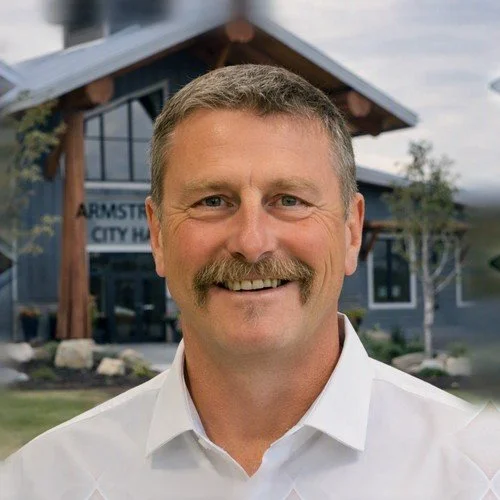
2026 Election Candidate
Environmental
Policies in the Armstrong Official Community Plan "direct future growth strategically to protect ecological and agricultural areas, offer more housing and transportation choices, support economic prosperity and diversity, prioritize sustainable municipal infrastructure planning, enhance community wellbeing, and support our transition to a more sustainable and climate resilient community." Please give local examples of 'good' and 'not good' building development in Armstrong, and state why. Do you support the downtown revitalization plan for Armstrong and why/why not?
I think good development in Armstrong is development that fits our community and makes good use of the services we already have in place. Good projects provide needed housing or business opportunities while still fitting the character of the neighbourhood and keeping Armstrong a great place to live.
Development is less successful when it puts too much strain on roads, infastructure, or other services, or when it does not fit well with the area around it. Growth is important, but it needs to be carefully planned.
I support Armstrong's Downtown Revitalization Plan. Our downtown is the heart of the community. Current improvements will make it safer, more attractive, and easier to visit. It will help local businesses and create a better experience for residents and visitors. I believe we can improve our downtown while keeping the small-town charm that makes Armstrong special. Keep an open mind until the project is complete and then evaluate it, judging it before its completion will not provide the big picture.
Armstrong has experienced significant climate impacts for the last few years. How do you propose to address these crises, both in preparing ahead for disasters like drought, wildfires, heat domes and floods, as well as reducing greenhouse gas (GHG) emissions that lead to climate change?
Armstrong has taken several positive steps to address climate change; the focus now should be on building on that work rather than creating new programs. The city has made climate action a priority, our community has also experienced droughts, wildfires, extreme heat, and flooding, which have affected residents, and infrastructure.
As someone who sits on the collaborative leadership team for water conservation, I see firsthand the importance of continuing to strengthen the work that is already underway. Armstrong has already taken action to address extreme heat by ensuring cooling centres are available when heat emergency thresholds are reached, and the city has invested in projects such as the Meighan creek diversion project to help reduce flood risk and protect homes and infrastructure. Moving forward, the focus should be on continuing to improve water conservation during drought periods, expanding Fire Smart participation, and ensuring future infrastructure investments are designed with climate resilience in mind. By building on the strong foundation that already exists, Armstrong can better protect residents, support its economy, and reduce the long-term costs.
Do you support the use of public funds to contribute to acquiring natural lands for environmental conservation purposes? Under what conditions would the perceived need for more housing, businesses, roads and other infrastructure prompt you to trade away natural lands with high ecological value for urban expansion?
I support using public funds to protect important natural areas when there is a clear benefit to the community and excellent value for taxpayers. Every opportunity should be evaluated on its own merits, with careful consideration of the costs and long-term impacts.
I believe we should do everything reasonably possible to avoid developing wetlands and valuable green spaces. These areas help reduce flooding, support wildlife, and make our community healthier and more resilient. Once they are lost, they are difficult, and impossible, to replace.
When growth is needed, I would first look at lands already designated for development and underused properties. I would only consider impacts to environmentally sensitive areas if there is a proven community need, no practical alternative, and the benefits clearly outweigh the environmental costs. Armstrong can grow while still protecting the natural spaces that make our community special.
Drought, contamination, increasing demand are just some of the water issues. What actions would you prioritise to protect our creeks, lakes, aquifers, and groundwater for home and agricultural water sources, habitat for fish and wildlife, and human recreation?
Protecting our water sources must remain a priority. Armstrong is fortunate to have access to deep aquifers that are generally less vulnerable to contamination than surface water sources, but that does not mean we can take them for granted.
One of my top priorities is protecting the Fortune Creek watershed, which plays a vital role in our community's water supply. Council is currently working with Ministry staff regarding exploratory drilling activity in the watershed to ensure potential impacts are fully understood and addressed.
I also support responsible water conservation, protecting wetlands and natural areas that help filter and store water, and planning for future growth so our water resources remain sustainable for residents, agriculture, fish and wildlife, and recreation. Good water management today will help ensure Armstrong has a reliable water supply for future generations.
Social
In smaller communities we need to be creative in how we help one another; how do you see the role of local government in this?
This is a tough question because many of the issues people face are really on the fringe of local government responsibilities. Local governments cannot solve every problem on their own, but they can help bring people together to find solutions.
Small communities thrive because people step up to help one another. I see the role of local government as being a facilitator and partner. We can bring organizations together, support volunteers, advocate to other levels of government, and help local initiatives succeed.
How do we tackle misinformation and growing distrust in local government as well as uncivil behaviour on social media and in person?
I do not think there is a simple solution to misinformation, growing distrust, or uncivil behaviour. Right now, it seems many people feel frustrated and disenfranchised, and that can make it easier for rumours and rhetoric to spread.
My advice is simple: ask questions, seek out the facts, and talk to your elected officials. If there is misinformation circulating, those who know the facts should make every effort to correct it. Honest communication and transparency are important if we want to rebuild trust.
I believe the treatment is common sense and patience. We need to listen more, assume good intentions, and remember that we are all neighbours. We do not have to agree on everything, but we should be able to disagree respectfully and focus on finding solutions that move our community forward
What personal and/or professional experience has most shaped your understanding of Truth and Reconciliation, and how would it influence your decisions as a municipal elected official?
My understanding of Truth and Reconciliation has been shaped primarily through relationships and listening. For many years, I have been proud to call a First Nations person my friend. Through our conversations, I have heard firsthand about his experiences in residential school, the mistreatment he endured, and many of the challenges Indigenous peoples have faced both on and off reserve.
I have also met with leaders from our neighbouring First Nations communities to build relationships and better understand their perspectives. In addition, I attended Indigenous awareness training to further my understanding of the history and experiences of First Nations people.
As a municipal elected official, I believe reconciliation starts with respect, listening, and building meaningful relationships. While municipalities cannot solve every issue, we can work collaboratively, learn from one another, and ensure Indigenous voices are heard when decisions affect our communities.
Cultural
How do you personally engage with arts, culture and heritage in Armstrong, and how do you think local government should support these features of our community?
I will admit I am not an artist, but I do appreciate the role that arts, culture, and heritage play in building community. I regularly participate in local events such as the IPE and other community celebrations, and I have a deep appreciation for Armstrong's agricultural roots and history.
I see local government's role as supporting the organizations, volunteers, and community groups that keep these traditions alive. By maintaining community spaces, promoting local events, and preserving our history, we help ensure that future generations can enjoy the same strong sense of community that many of us value today.
Economic
What is your understanding of how small local governments can support our economic development, including the success of our small local businesses?
Small local governments play a significant role in creating an environment where businesses can succeed. While we do not run businesses, we can support them through good planning, reasonable regulations, reliable infrastructure, and by working with community partners.
In Armstrong, one of our strongest partnerships is with the Chamber of Commerce. The City provides financial support to help the Chamber promote local businesses, attract visitors, organize events, and advocate for our business community. This partnership is a worthwhile investment that helps strengthen our local economy.
Small businesses are the backbone of our community. Local government should continue to listen to business owners, remove unnecessary barriers where possible, and support initiatives that encourage people to shop, work, and invest locally.
What is one action the municipality should take to strengthen our local food system and improve access to healthy, affordable food? Why that action?
One action I would continue to support is strengthening our partnership with the Chamber of Commerce and the Armstrong Farmers' Market. These organizations help connect residents with locally grown food while supporting our farmers and small businesses.
I would also continue advocating to the Provincial Government for programs such as the Farmers' Market Nutrition Coupon Program, which helps lower-income families, seniors, and others access healthy, locally produced food.
Supporting local food producers and improving access to local food is one of the most practical ways a municipality can help strengthen our food system. It keeps food dollars in our community, supports local agriculture, and helps ensure healthy food remains accessible to more residents.
Health
As Mayor / Councilor, how would you work to support access to medical services?
Access to medical services is primarily the responsibility of the Provincial Government, so this is another area where local government has limited direct authority. That said, we can still play a key role by advocating for our community and working with healthcare partners to identify opportunities.
Across British Columbia, new healthcare delivery models are being tested to address physician shortages and improve access to care. Some of these concepts are gaining traction and are worth continuing to evaluate as we look for solutions that could benefit communities like Armstrong.
Our role is to keep advocating, remain open to innovative ideas, and work collaboratively with the Province, Interior Health, and local healthcare providers. We should also make it known that Armstrong would be interested in participating in pilot projects and new programs that could improve access to healthcare for our residents. There is no quick fix, but by supporting innovative approaches and being willing to try innovative solutions, we can help improve healthcare access for our community.
How will you ensure that our planning of our built environment, our programs and our policies support the diverse physical and mental health needs of our population?
This is another area where local government can contribute but not necessarily lead. We cannot provide healthcare services, but we can create an environment that supports healthy living.
That means maintaining parks and trails, supporting recreation opportunities, ensuring public spaces are accessible, and making planning decisions that help people stay connected to their community. Our Active Transportation Plan is a good example of this, as it focuses on creating safer ways for people to walk, cycle, and move around the community. I also support efforts to create safe, welcoming gathering places in our downtown where residents can connect with one another.
Sometimes something as simple as a safe sidewalk, a trail, a downtown gathering space, or access to recreation programs can have a positive impact on both physical and mental health.
My focus would be on using common sense and considering how our decisions affect residents of all ages and abilities, with the goal of keeping Armstrong a healthy, welcoming, and connected community.
