
Victor Cumming
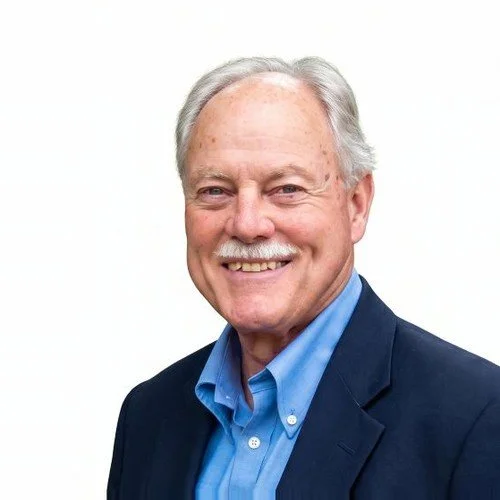
2026 Election Candidate
Environmental
A core principle of Vernon's Official Community Plan is to prevent sprawl and limit growth to within the urban containment boundary.
a) Under what conditions do you think Council should make an exception to this core principle?
b) Please give local examples of existing 'good' and 'not good' building development in Vernon, and explain why.
The cost to provide services to neighbourhoods outside the urban containment boundary is much higher than in core areas, and the extra costs are paid by all Vernon taxpayers. To minimize tax subsidies, and problems like increased traffic, we should fill existing subdivisions. We could double our number of homes through infill and building out subdivisions within the containment boundary, increasing density close to stores, schools and services. Exceptions should only be considered when the community benefit of a development proposal is great and the difference from the OCP is small. "Good development" is compatible with neighbouring homes. In existing neighbourhoods with small homes, it’s fine to have duplexes, tri- or fourplexes up to 3 stories that respect the look of the neighbourhood (e.g., the Seaton area and lower East Hill near 39th Ave). Low-rise apartments set back from neighbours (e.g. 39th Ave and Alexis Park Dr), are also good; and apartments in mixed-use commercial buildings (e.g. near BX Crossing at 48th Ave and 25th St). Poor developments have buildings set high above their neighbours (e.g. P.V. Rd near 37th Ave); or to have tall buildings with inadequate setbacks
Vernon has a Climate Action Plan (CAP) that aims to reduce GHG emissions in transportation, buildings and waste, and prepare for climate impacts like wildfires, heat domes, floods, severe weather events.
a) What aspects of this plan are most important and urgent and how will you ensure implementation?
b) The CAP will undergo a review process in 2027. What would you like to see in a revised CAP?
1) We must keep development with the urban containment boundary. 2) The City must lead—reducing GHGs for our fleet and buildings. 3) The City must focus transportation infrastructure on non-vehicle modes, starting with sidewalks; expanding transit and multi-use paths; reducing conflicts between motor vehicles, pedestrian and cyclists; and providing secure parking for bicycles and other mobility devices at core destinations. 4) We need to work with local colleges and universities to meet the skills training needs of an electrified future. 5) We must continue to educate and engage the community, since CAP success depends on everyone’s participation.
The GHG emission reduction actions in the 2021 CAP will not be enough to reach our goal of net zero emissions by 2050 and must be stronger. Also, the plan didn’t consider consumption-based emissions—as these can be addressed by the whole community, they’re a chance to engage all residents to help achieve plan targets. There may also be ways to sequester carbon to help reach net zero—working with agriculture and on forest land within the city. We also must update the GHG emissions inventory and expand community engagement.
Do you support the use of public funds to contribute to acquiring natural lands for environmental conservation purposes? Under what conditions would the perceived need for more housing, businesses, roads and other infrastructure prompt you to trade away natural lands with high ecological value for urban expansion?
I strongly support using public funds to acquire natural lands. At GVAC, I voted for acquisition of parcels along the east side Swan Lake corridor; for the Grey Canal trail in Coldstream Ranch, the section near the Rise, and the section from Turtle Mt. to Davison Orchard. I have also supported acquiring parcels for Girouard Park and the new Turtle Mt. Park; and for establishing public areas along BX and Vernon creeks as a requirement in our new OCP. These acquisitions both provide conservation areas and places for recreation. There are high-value conservation areas in the Commonage that could also be a good addition to our park system.
There are more than enough existing current lands for housing, commercial and industrial use to handle double the population of Vernon. There are a few specific locations where new roads and multi-use paths are required to cross sensitive lands, for example, the 48th Ave Extension from Hwy 97 to Old Kamloops Rd, the Apollo Extension from upper Long Acre Dr to Bench Rd, and roads within the Bella Vista/O’Keefe range lands (if the Okanagan Indian Band decides to partially develop their new land holdings). These are reasonable potential exceptions.
Our water reservoirs are at critically low levels. No longer can we count on having the water resources we enjoyed even a few years ago. Drought, contamination, increasing demand are just some of the water issues. What actions would you prioritise to protect our creeks, lakes, aquifers, and groundwater for home and agricultural water sources, habitat for fish and wildlife, and human recreation?
To reduce risks of blue-green algae in water sources we must get more homes onto community sewers. We must also preserve and restore natural areas along urban streams. The Polson Park creek restoration is a great example—improving aquatic habitat and water quality. We should also update bylaws—e.g. to promote rainfall capture, and for low-water landscaping.
To reduce future shortages, Greater Vernon Water (GVW) must work with residents, agriculture and industry to better manage water. We must continue to reduce leaks in public systems and upgrade irrigation in public areas. GVW has asked the province to stop well drilling in the Coldstream aquifer as it contributes water to Kal Lake.
We must expand the ability of farmers to share water with each other during shortages, and advocate for funds for irrigation improvements and on-farm water storage and collection systems. We will have a new Okanagan Lake intake in 2027 providing irrigation water to the Bella Vista area. This summer, we were also able to bring treated wastewater to the area for irrigation use. We should also use treated wastewater for dust control, construction, and boulevards to reduce demands on water sources.
Social
What personal and/or professional experience has most shaped your understanding of Truth and Reconciliation, and how would it influence your decisions as a municipal elected official?
Professionally I have worked for more than 100 First Nations governments, communities, and their economic development corporations since 1983. I have been a treaty advisor on a number of treaty processes working directly for First Nations. I worked as an economic development and community planning consultant for Okanagan Indian Band (OKIB), West Bank Indian Band, Penticton Indian Band, Splatsin (Enderby) and Neskonlith (Chase, Salmon) to name those located in or near Vernon. This deep, working connection with First Nations has directly impacted how I represent Vernon at the Collaborative Leadership Table (Local government and Syilx leadership) focused on protecting water in Okanagan. It has also enabled me to build a trusted rapport with the current Chief of OKIB (Dan Wilson) and many of OKIB Councillors. I have a significant understanding of the issues that are the subjects of current Truth and Reconciliation processes and have led our Council on reconciliation activities and requirements—including the design of our Active Living Centre, Greater Vernon Cultural Centre, and the joint partnership that is guiding the North Aberdeen Plateau wildfire mitigation process.
What is one action the municipality should take to strengthen our local food system and improve access to healthy, affordable food? Why that action?
The most important step is to improve water security for agriculture in the City of Vernon. Agriculture in Greater Vernon relies on irrigation as it has for 120 years. Providing predictable, secure irrigation water supply gives current on-farm investments a high potential to survive and provide food locally as well as for the broader markets they serve . For Vernon, the one immediate action is for the City obtaining a long-term environmental permit to provide highly-treated reclaimed water for agricultural irrigation, and respond to ongoing drought conditions, while maintaining the current spray irrigation infrastructure on the Commonage side of Vernon and protecting our freshwater sources. The City of Vernon partnered with the Regional District of North Okanagan to obtain a temporary provincial approval in July 2026. The city is also bringing on a new Okanagan Lake intake in 2027, drawing untreated water to be used by agriculture.
What is one specific change you would make to better support local non-profits, and do you have personal experience (e.g. volunteer, board member, staff, and/or passion for a specific issue) that informs that action? Please include one brief example.
As a professional, I have been an organizational development and strategic planning consultant to non-profits since 1983, in Canada and overseas, including those providing non-market housing. I have been on the boards and executives of many non-profits, up until I became Mayor in 2018. I was awarded a lifetime membership by our local Okanagan Landing Community Association in recognition of my 18 years of service. I have a passion for community associations that focus on neighbourhood social development and connections. I was on Ribbons of Green Trail Society Board from 2003-2018 focused on gaining rights-of-ways for trails and natural spaces in Greater Vernon.
The City of Vernon with its significant non-market housing needs must continue to support the non-profit housing providers by continuing to fund the Social Planning Council and support the City’s Affordable Housing Committee to coordinate activities and partnerships in this sector. The City also needs to identify funding and detailed site-planning opportunities to continue to assist our non-profits with pre-planning and land acquisition for new non-market housing.
Should the municipality continue to secure and provide land for affordable housing projects? Why or why not? If yes, how would you handle any neighbourhood concerns brought forward to Council?
Recognizing housing is a provincial mandate, our current and previous Councils have nonetheless gone ahead and secured land for affordable housing projects. Our main funder, BC Housing (given the high demand for their financing), has made it a requirement for the non-profit to have the land for their proposed developments. To meet this need, Vernon has purchased land for these affordable developments, securing the BC Housing funding. The City has also provided funding in the form of paying development cost charges, which is a substantial contribution to the costs of projects. Neighbourhood concerns have been addressed with systematic, respectful processes to consider neighbourhood concerns, and projects have proceeded. I fully support this approach in the future.
Cultural
Vernon does not have a dedicated public art policy to guide how public art is selected, funded, maintained, or removed, while regional cultural direction sits with the RDNO through the Greater Vernon Cultural Plan. Do you support developing a public art policy for Vernon, and how would you coordinate the City's role with the Plan?
I recommend that Culture in general remains with Greater Vernon, as a sub-regional activity and not limited to the City of Vernon. I support looking at a framework for a public art policy as it specifically relates to the City of Vernon, and fits with our OCP and other city planning.
With more than 75 arts and culture groups active in the region, how would you work to remove barriers and strengthen City partnerships so that public spaces and facilities are accessible and equipped for community programming and gatherings?
The Greater Vernon Cultural Centre performance space (150 seats) and open space (75 seats) were specifically designed to be available for small audiences and at low costs. For physical accessibility, if that is a concern, the complete building and plaza have been designed to the Rick Hansen Certification gold standard. There is an elevator to all floors for both front and back of house, as well as wide doorways, halls, grade level entrances, etc. We must continue to identify and remove existing barriers for our cultural events as it relates to affordability and access.
Arts and culture help shape who we are as a community. As Vernon continues to grow, how do you see our identity changing, and what kinds of arts and culture initiatives would you support to strengthen that future?
Vernon has been socially and culturally shifting in the last decade brought on by in migration of individuals and families, from other parts of BC, Canada, and the world. We are seeing a wider range of cultural groups than has been traditionally found in Vernon. This is a great thing. In addition, the resurgence of the Syilx culture has presented the community with opportunities to learn, and at times move closer, to Okanagan people’s foundation values and way of life. The Greater Vernon Culture Plan was developed with the common vision of a culturally vital community. One significant step will be the opening of the Greater Vernon Cultural Centre (currently under construction) in early 2028. This will assist with invigorating our downtown helping us attract people to live and work in Vernon.
Artists make up as much as 12% of the North Okanagan population and the sector generates over $126 million in direct economic activity and $46 million in GDP, how will you strengthen the role arts and culture play in our local economy, tourism, and community wellbeing?
There is a need to consistently link arts and cultural events that are commercial, or have commercial components, to potential patrons. This partial focus has been adopted by the Performing Arts Centre and Arts Centre both of which see the positive impact of consistently engaging paying customers. Connecting late fall, winter and early spring visitors to our cultural events is a next step. At times, the locale of performances may need to be shifted or public transportation be provided to maximize visitor access. Community well-being needs should be met through the expansion of the current mix of events and performances where access may be a key element. Public transit to and from our performance venues would be helpful to enable accessibility for all. The economic contribution of artists and artisans in the emerging creative economy is significant—as was identified in Greater Vernon’s Culture Plan. Moving forward, it would be good to go back to the plan and review what progress has been achieved in building the capacity of individual cultural organizations.
Economic
The business tax base is critical to the provision of services at the municipal level. How would you support business retention and expansion in the City of Vernon?
Cities have legislative restrictions on directly assisting individual enterprises. A key way that Vernon can assist all businesses is to ensure basic infrastructure is maintained, e.g. roads, sidewalks, drinking water, irrigation water, and wastewater systems, providing stable systems and stable costs for business. Business retention and growth requires infrastructure to keep up to community growth. Vernon’s 5-year rolling capital plan provides stability and foresight for reliable systems and stable pricing. For development, the City needs to continue streamlining the building permit processes. For tourism, we must continue to invest in niche marketing focused on the shoulder seasons, and establish better public transportation links to our tourist destinations. We also need to expand economic development staff, linking businesses to regional suppliers and human resources. Finally, the City needs to continue advocating with other Okanagan communities for upgrades to Hwy 97, adding efficiency for transportation and visitors alike. Key highway improvements include those at Commonwealth Road in Lake Country, an overpass at Airport Rd, and an alternative highway solution for Peachland.
Finding employees has consistently been identified as a top challenge by Vernon businesses in the City of Vernon Business Walks surveys. How should the City support businesses in meeting their workforce needs?
The City, in partnership with Community Futures has supported the Rural Community Immigration Pilot program with significant success. The program has provided a fast track to Canadian permanent residency for more than 500 skilled workers and more than 80% have stayed in the region. We should continue this program.
Lower wage workers need affordable housing. Non-profit housing providers, with City support, have successfully obtained funds from BC Housing and are completing developments. Many more projects are ready to go when more funding becomes available. Co-op housing should also be a focus in Council’s next term, to bring missing middle homes to Vernon. We must help improve transit and other mobility so people can get to work without requiring a vehicle.
There is a direct link between affordable high-quality lifestyle, and attracting and keeping skilled workers. The recent public investments in the ALC, GVCC, Polson Park, Kin Racetrack Park, Marshall Fields, Vernon Athletic Park, boat launches, expanded multi-use paths, trails, mountain bike areas, beach accesses, etc. all contribute to retaining and attracting the entrepreneurs and workforce required for a vibrant community.
What role does the City have with supporting growth-oriented sectors like manufacturing and agricultural processing?
Our large existing manufacturing and agriculture production are mainstays of the community and need special attention. Although they exist primarily outside City boundaries, we work closely with them, including through the RDNO. We have also supported new or expanded industrial parks within Vernon. The City is assisting these sectors with focused skilled labour programs and maintaining strong provincial relationships to influence associated policies in forestry, agriculture, metal fabricating, mining and electricity production. As with business expansion and retention (Q1 above), a critical role is to provide municipal infrastructure including water (provided regionally with local government partners). Other critical components are business systems improvement and product development. The focus on skilled worker retention and expansion (Q2 above) is also key. The role of City is to continue linking these sectors to existing entrepreneurs and connecting them to other players—including UBC-O’s engineering and other departments that bring critical knowledge, product development and problem-solving to local enterprises.
Considering the recent water and fire crisis, how should the City assist businesses to become more resilient to future risk?
This year's drought triggered severe water restrictions. Businesses relying on large water volumes, primarily agriculture, need support to be viable during shortages. The City’s role on Greater Vernon Water is to help provide oversight for managing the system. It is also the City’s role to make best use of our treated wastewater, e.g. for business landscaping, nurseries, forage, and orchards, decreasing drought impacts on freshwater sources. We are reducing wildfire risks on City lands, and working closely with businesses in to FireSmart around their properties. We are also working with partners to reduce catastrophic wildfire risk on the west slope of Vernon Hill and around our reservoirs. The City has updated, publicly-available flood maps. We have started to upgrade watercourse crossings to decrease flood impacts to roads. We have also built a siltation pond on BX Creek to catch sediment upstream—protecting key infrastructure. It is the mix of emergency preparedness, wildfire risk reduction, FireSmart assessments; providing information about flood mapping, water availability and use; and investing in upgraded infrastructure; that will reduce future risks for Vernon businesses.
Health
As Mayor / Councilor, how would you work to attract and retain medical professionals in Vernon?
Although health care is not a municipal responsibility, and is the responsibility of the Province, we still have a role. The Province and local organizations have established advanced recruitment systems for medical professionals through the Shuswap/North Okanagan Division of Family Practise and Jubilee Hospital. Vernon, through its Economic Development Committee, linked those recruiting doctors with potential housing providers, and housing units were quickly built to provide guaranteed accommodation for recently graduated doctors during their required 2-year residency. The City also needs to continue to assist with addressing the need for all kinds of worker housing, and particularly for health care staff in the proposed Jubilee Hill Village Centre. The City needs to focus on securing appropriate land, and connect it to organizations and companies willing and able to provide the appropriate housing in the Jubilee Village Centre area.
If elected, what specific actions would you take within the authority of your municipal office to improve access to in-person mental health supports and services in our community, and how would you work with other levels of government to strengthen support for those services?
Although mental health care is not a municipal responsibility, and is the responsibility of the Province, there are still ways we can help. The City has provided a cash grant to CMHA for their new Youth Mental Health Foundry in downtown Vernon. We need to continue to encourage all community members to financially support the development of the Foundry. All North Okanagan and Shuswap Hospital Board members have supported the original plan by Interior Health to construct a much-needed new regional psychiatric ward at Vernon’s Jubilee Hospital. The proposed facility was announced by the Premier but has since been stalled, given the estimated escalation in cost and the lack of Provincial funding due to the substantial downturn in Canada’s economy. In the next term, City representatives on the Regional Hospital Board need to strongly advocate to the Province to hone the project's focus and reduce its scope (which has many other aspects), and potentially the design specifications, anso that it can advance quickly once provincial funding becomes available again.
How will you ensure that our planning of our built environment, our programs and our policies are accessible, and support the physical and mental health needs of our population?
Vernon has been working to improve its accessibility for individuals with a variety of limitations. As part of this, in 2025, North Okanagan communities formed a joint Accessibility Committee. The resulting plan has many recommendations, and we now need a City Action Plan to implement them. To achieve accessibility for all, proven adaptations must to be integrated into our built environment and our 5-year capital plan. Several improvements are underway or recently completed. The Greater Vernon Cultural Centre is being built to an accessibility gold standard. GVAC has been making accessibility improvements to our trail systems—including parking and washrooms. The playground at Marshall Fields is designed and constructed as a full-access playground for all abilities. We upgraded Carlson Park, with easier access and additional trails dog walkers in a heavily shaded area—particularly important for high-heat periods. The ALC is specifically designed for all abilities—including pool access; change rooms and other amenities; and an indoor track with features to help mobility challenges, enabling all to exercise in all weather and conditions, supporting mental as well as physical health.
What would you do to support the physical and mental health of members of our community against the effects of climate change, especially those who are most vulnerable?
For the most vulnerable, the City must ensure the Province builds the new, already-approved shelter. The combination of stable, safe shelter, protected from temperature extremes, is critical to those individuals and the well-being of the whole community. At the next level of vulnerability, the City has partnered with non-profit housing providers to construct and operate climate resilient, non-market housing. This has had significant success, providing at least 600 quality housing units, with weather-proofed indoor spaces for extreme conditions. We must continue to support non-market developments. Many neighbourhoods need enhanced parks and indoor facilities for shade, protection from extreme heat, cold or smoke—places for kids to play and grown-ups to relax. This is especially critical for the elderly and those most vulnerable to extreme weather. In extreme weather emergencies, we activate our emergency operations centre, coordinated with provincial disaster response. This includes emergency social services. I will continue to support the efforts of our great emergency response staff and volunteers, and as mayor, continue to provide regular information updates.
