
Kari Gares
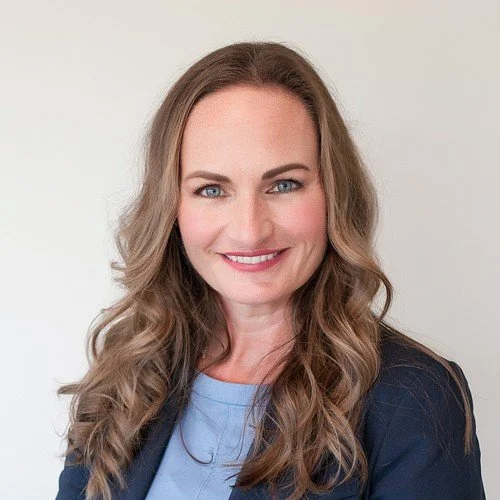
2026 Election Candidate
Environmental
A core principle of Vernon's Official Community Plan is to prevent sprawl and limit growth to within the urban containment boundary.
a) Under what conditions do you think Council should make an exception to this core principle?
b) Please give local examples of existing 'good' and 'not good' building development in Vernon, and explain why.
I support smart growth. The Urban Containment Boundary is an important tool in achieving it, but it should not replace thoughtful evaluation of individual proposals.
Development outside the boundary should face a high threshold and demonstrate a clear net-positive benefit to Vernon. Council should consider: Are we protecting the environment over the long term? What are the social and economic benefits? Who bears the infrastructure and servicing costs? Does the proposal create a meaningful new benefit for the broader community?
I apply the same principles when considering “good” or “bad” development. Good development is smart development - it respects its surroundings, considers infrastructure and environmental impacts, contributes to housing or economic opportunity, and enhances the community’s form and character.
I am concerned that provincial legislation such as Bill 44 can undermine smart growth. While increasing housing supply is important, in my view, prescribed density and reduced opportunities for traditional municipal oversight and public hearings can result in development that does not adequately reflect neighbourhood form, character or local circumstances.
Vernon has a Climate Action Plan (CAP) that aims to reduce GHG emissions in transportation, buildings and waste, and prepare for climate impacts like wildfires, heat domes, floods, severe weather events.
a) What aspects of this plan are most important and urgent and how will you ensure implementation?
b) The CAP will undergo a review process in 2027. What would you like to see in a revised CAP?
Vernon already has an award-winning Climate Action Plan, and my priority is continuing to implement it through practical, measurable actions. We have made progress in areas including organics diversion, flood mitigation, FireSmart initiatives, fuel management, active transportation and improving the resilience of City infrastructure.
I support continuing to pursue the achievable, lower-cost initiatives that provide environmental and community benefits without placing an unreasonable financial burden on taxpayers. Provincial and federal grants have also allowed Vernon to advance important initiatives. As those funding programs become more constrained or competitive, we must continue advocating for our community while recognizing that municipal resources are not unlimited.
For the 2027 review, I would like to see greater emphasis on adaptation and resilience, particularly wildfire and water security. In the Okanagan, drought, wildfire, extreme heat and smoke are tangible risks. While water management requires strong regional partnerships, Vernon should ensure water security is part of our long-term resilience planning.
Do you support the use of public funds to contribute to acquiring natural lands for environmental conservation purposes? Under what conditions would the perceived need for more housing, businesses, roads and other infrastructure prompt you to trade away natural lands with high ecological value for urban expansion?
I support the strategic use of public funds to protect natural lands where there is a demonstrated environmental and community benefit. However, municipal resources are not unlimited. Council will not always have the financial capacity to purchase ecologically significant lands, particularly when balanced against essential infrastructure, public safety and other community priorities.
Any acquisition should therefore be evaluated against clear criteria, including ecological significance, public benefit, connectivity to existing natural areas, acquisition and long-term stewardship costs, and overall value to taxpayers. We should also pursue partnerships, grants and other funding opportunities that can help protect important lands without placing the entire financial burden on Vernon taxpayers.
I believe in smart growth and achieving a net-positive outcome for our community. Where development of environmentally significant lands is contemplated, the threshold should be high. Council should consider alternatives, environmental impacts and mitigation, infrastructure costs, and the broader social and economic benefits before making a decision.
Our water reservoirs are at critically low levels. No longer can we count on having the water resources we enjoyed even a few years ago. Drought, contamination, increasing demand are just some of the water issues. What actions would you prioritise to protect our creeks, lakes, aquifers, and groundwater for home and agricultural water sources, habitat for fish and wildlife, and human recreation?
Water security must be one of our region’s highest priorities. My approach starts with a simple principle: protect the source first. Preventing contamination or degradation of our creeks, lakes, wetlands and aquifers is far more responsible than trying to restore or replace those resources later.
I would prioritize protecting riparian areas and wetlands, continuing creek restoration, improving stormwater management, and ensuring land-use decisions consider impacts on water quality, groundwater recharge and natural drainage systems.
Water availability must also be part of smart-growth decisions. As our community grows, we need to understand whether our water supply and infrastructure can sustainably support that growth - not just today, but decades from now.
Conservation remains important. We should continue reducing system leakage, improving municipal irrigation practices, encouraging water-efficient landscaping and exploring opportunities for reclaimed water, particularly where potable water is unnecessary. However, conservation alone cannot address every future shortage. We must also plan for adequate storage, infrastructure, system redundancy and alternative sources.
Social
What personal and/or professional experience has most shaped your understanding of Truth and Reconciliation, and how would it influence your decisions as a municipal elected official?
My education in History, including Indigenous history, gave me an early understanding that reconciliation has to begin with truth. We need to understand our history, including the parts that are difficult, before we can build better relationships going forward.
My time on Council has added a much more practical perspective. Vernon and the OKIB are neighbours, and our relationship should be based on respect, listening and a willingness to work together. I was proud to be part of Council when the OKIB flag was raised at City Hall. It was a meaningful acknowledgement, but reconciliation cannot be limited to ceremonies or words.
As an elected official, I believe it means listening before assuming we know the answer, respecting the knowledge and history of the syilx people, and looking for opportunities where our two governments can work together on issues that affect both communities. I would approach those decisions with respect and with an understanding that reconciliation is an ongoing relationship, not something we simply check off a list.
What is one action the municipality should take to strengthen our local food system and improve access to healthy, affordable food? Why that action?
One action I would focus on is expanding the long-term use of reclaimed water to support our agricultural producers.
We already have an important resource in our reclaimed water system, but we need the Province to modernize the legislation around its use and provide permanent, practical changes that give farmers and agricultural producers more certainty. In a region where water is increasingly important, making better use of reclaimed water can help build capacity in our agricultural sector and support local food production.
This also needs to be part of a bigger picture. We should continue supporting the Regional Agricultural Advisory Committee's work and the Regional Agricultural Plan, move forward with regional opportunities such as the Agri-Hub through the RDNO, and support community organizations like the Good Food Box that help make healthy food more affordable and accessible.
For me, strengthening our local food system means supporting the people who grow our food while also making sure more people in our community can access it.
What is one specific change you would make to better support local non-profits, and do you have personal experience (e.g. volunteer, board member, staff, and/or passion for a specific issue) that informs that action? Please include one brief example.
One change I would make is to create a clearer and more consistent way for local non-profits to work with the City. That means making municipal processes easier to navigate, having clear points of contact, and looking for opportunities to partner when the work of a non-profit is meeting an important community need.
I have seen the value of these partnerships first-hand through my involvement with local non-profits. One example is the Salvation Army and the work that went into bringing the new food bank model together. As a member of its Community Council, I was able to bring my non-profit experience together with my knowledge of municipal processes to help navigate what was a complex system. The City and the Salvation Army worked hard together to find a path forward and ultimately help create a much-needed service for our community.
Non-profits are often doing important work with limited resources. The City cannot fund every organization or solve every problem, but we can be a better partner and make sure our processes are not making their work unnecessarily difficult.
Should the municipality continue to secure and provide land for affordable housing projects? Why or why not? If yes, how would you handle any neighbourhood concerns brought forward to Council?
Yes. I believe the City should continue to consider municipal land for affordable housing when the location and the project make sense. Land is one of the largest costs in building housing, and there are times when making City-owned land available can help make a project viable that otherwise might not be.
This approach is also incorporated into our Housing Strategy and City processes, so we are not making these decisions in isolation. We can identify opportunities, work with non-profit and other housing partners, and look at how City-owned land can be used strategically to help meet our community's housing needs.
When neighbours raise concerns, Council has an obligation to listen. Supporting affordable housing and listening to neighbourhood concerns are not mutually exclusive. People deserve clear information and an opportunity to raise legitimate concerns about traffic, parking, building design, density or other neighbourhood impacts. Where we can reasonably address those concerns, we should.
Cultural
Vernon does not have a dedicated public art policy to guide how public art is selected, funded, maintained, or removed, while regional cultural direction sits with the RDNO through the Greater Vernon Cultural Plan. Do you support developing a public art policy for Vernon, and how would you coordinate the City's role with the Plan?
Yes, I support developing a public art policy for Vernon. Public art adds character to our community, tells our stories and creates spaces that people remember. But if we are going to invest public dollars in it, we should also have a clear and transparent process for how art is selected, funded, maintained and, when necessary, removed.
This would not replace the Greater Vernon Cultural Plan or duplicate the work being done by the RDNO. The Cultural Plan provides the broader regional direction, while a City public art policy would deal with the decisions that fall within Vernon's responsibility - our streets, parks, public spaces, infrastructure and City-owned properties.
Our new OCP already identifies a public art policy as something to consider as part of a Cultural District Strategy. I see that as a good opportunity to work with the RDNO, local arts organizations, Indigenous partners, artists and the broader community to develop something that fits Vernon while still supporting the regional vision.
The goal should be a policy that is clear, fair and financially responsible, while leaving enough room for creativity.
With more than 75 arts and culture groups active in the region, how would you work to remove barriers and strengthen City partnerships so that public spaces and facilities are accessible and equipped for community programming and gatherings?
With so many arts and culture organizations in our community, I think one of the most useful things the City can do is make it easier for them to work with us and use our public spaces and facilities.
That starts by looking at the barriers we control. Are our permitting processes easy to understand? Are fees reasonable for community organizations? Do groups know who to contact at City Hall? Are there underused public spaces that could be opened up for performances, exhibits, festivals or other community gatherings?
We also have an elected official who serves as the City's liaison to ACNO. I think there's an opportunity to be more than simply bringing information back and forth. The liaison can help identify barriers, connect them with the right people at the City, and help find practical ways to move good ideas forward. That doesn't mean circumventing City processes or speaking for the arts community; it means helping people better navigate those processes.
I don't think the answer is always another program or another building. Sometimes it is simply making better use of what we already have and making it easier for community groups to bring their ideas forward.
Arts and culture help shape who we are as a community. As Vernon continues to grow, how do you see our identity changing, and what kinds of arts and culture initiatives would you support to strengthen that future?
Vernon is growing and changing, and our identity will change with it. But I don't think growth means losing what makes Vernon uniquely Vernon.
We have a strong agricultural history, an Indigenous history, a vibrant downtown, our lakes and natural environment, and generations of people who have helped build this community. New residents also bring different experiences, cultures and ideas. Arts and culture give us a way to bring those stories together while continuing to create new ones.
One idea I would like to see explored is the development of a Cultural District which could help connect our cultural facilities, public spaces, businesses, public art and downtown in a more intentional way.
An Art Walk could be part of that. It could connect public art, murals, Indigenous stories, heritage and other important places throughout the area, while giving residents and visitors an opportunity to walk through our community, learn, reflect and participate.
I don't think government should decide what Vernon's culture is. Our role should be to help create the spaces and opportunities where those stories can be shared.
Artists make up as much as 12% of the North Okanagan population and the sector generates over $126 million in direct economic activity and $46 million in GDP, how will you strengthen the role arts and culture play in our local economy, tourism, and community wellbeing?
We don't have to look far to see what happens when a community recognizes that. Kelowna has been measuring the economic impact of its creative sector for years, and that research has helped inform its Cultural Plans and how it invests in arts and culture. Kelowna reports that its creative sector generates hundreds of millions of dollars in economic activity and supports thousands of jobs.
We need to better understand the economic impact of our own arts and culture sector and then use that information to make thoughtful decisions about where investment can have the greatest benefit.
I would like to see stronger connections between arts and culture, Tourism Vernon, Ec Dev and our downtown. When we promote Vernon as a destination, our story should be more than our lakes, trails and outdoor recreation. Our arts, culture, history, festivals and local creative community give visitors another reason to come here and another reason to stay longer.
When we invest thoughtfully in arts and culture, the benefit reaches beyond the artist or organization receiving that support. It contributes to a more vibrant downtown, local businesses, tourism and, ultimately, a stronger community.
Economic
The business tax base is critical to the provision of services at the municipal level. How would you support business retention and expansion in the City of Vernon?
A strong business tax base is important because it helps pay for the services and infrastructure our entire community relies on. For me, economic development starts with the businesses that are already here.
We need to regularly meet with our employers and understand what is helping them grow and what is getting in their way. Our Business Walks are useful, but those conversations need to continue throughout the year and lead to action.
The City should also make it easier to do business here. That means clear development service standards, predictable permitting and approval processes, identifying issues early and not moving the goalposts partway through a project. Businesses need certainty when they are deciding whether to invest, expand or hire.
Finally, we need to measure whether our economic development efforts are actually working. Are we retaining businesses? Are they expanding? Are we creating jobs, attracting private investment and growing our commercial and industrial assessment base?
Business attraction is important, but some of our best opportunities are already here.
Finding employees has consistently been identified as a top challenge by Vernon businesses in the City of Vernon Business Walks surveys. How should the City support businesses in meeting their workforce needs?
When businesses consistently tell us they cannot find employees, we need to recognize that workforce development is an economic development issue.
The City isn't going to train someone's employees or solve the labour shortage on its own. Our role is to bring the right partners together and address the things within municipal control that make it easier for people to live and work here.
Housing is a big part of that. I have said before that housing is essential infrastructure for a healthy economy. If a nurse, tradesperson, hospitality worker or young professional cannot find housing they can afford, employers are going to have a harder time recruiting and keeping them. That is why attainable, rental and workforce housing needs to remain connected to our economic development work.
Businesses should be part of those conversations so that training responds to the skills they actually need.
There are other pieces as well - childcare, transportation and creating a community where young people and families want to stay. The City doesn't control all of them, but we can be a bridge between employers, educators, other governments and community partners.
What role does the City have with supporting growth-oriented sectors like manufacturing and agricultural processing?
The City has an important role in supporting sectors like manufacturing and agricultural processing, but our role is to create the conditions that allow those businesses to invest and grow.
One challenges is that Vernon has a limited supply of industrial land. That means we need to protect the employment land we have and make good decisions about how it is used.
Manufacturing is already an important part of our economy, and agriculture gives us an opportunity to do more than simply grow food. Value-added processing allows more of the economic benefit of what we produce here to remain in our region.
That is why regional partnerships are so important. The NOK Agri-Hub is a good example. Vernon does not need to build everything within our municipal boundaries to benefit from the jobs, investment and food-processing capacity created within the region.
I believe reclaimed water should be treated as economic infrastructure. We should continue advocating for the Province to modernize the rules around its use so that, where appropriate and safe, it can support agriculture and other non-potable uses and take pressure off our potable water system.
Considering the recent water and fire crisis, how should the City assist businesses to become more resilient to future risk?
The water shortage and this summer's fires were reminders that economic resilience and emergency preparedness must be part of how we plan for Vernon's future.
The City needs to make the infrastructure and services we control as resilient as possible, including water, roads, sewer, fire protection and emergency response. Water is particularly important, and we need to look at long-term capacity, storage, system losses, conservation, watershed protection and greater use of reclaimed water.
We also need to work with businesses on emergency preparedness and business continuity. What happens when a business loses water, power, road access or suppliers for several days? During an emergency, timely and accurate communication is critical so businesses can make informed decisions.
After major events, we should also sit down with affected businesses to learn what worked and what needs to change. We cannot eliminate wildfire, drought or other risks, but we can be better prepared to respond and recover.
Health
As Mayor / Councilor, how would you work to attract and retain medical professionals in Vernon?
Healthcare is not a municipal function, so we need to be careful not to promise that the City can recruit doctors, nurses or other medical professionals on its own. That responsibility primarily rests with the Province, Interior Health and healthcare providers.
Where the City does have a role is in making Vernon a community where medical professionals want to build their careers and their lives. Housing, recreation, parks and trails, transportation, childcare advocacy and a vibrant community all contribute to attracting and retaining people.
The City can also be a strong partner. Economic Development and Tourism Vernon can work with Interior Health and local medical organizations to help showcase Vernon when recruiting professionals.
As Mayor, I would maintain a strong relationship with Interior Health and the Province, advocate when there are shortages or service gaps, and focus on the things within our control that make Vernon a place where people want to come, work, raise their families and stay.
If elected, what specific actions would you take within the authority of your municipal office to improve access to in-person mental health supports and services in our community, and how would you work with other levels of government to strengthen support for those services?
Mental health services are primarily the responsibility of the Province and health authorities. The City should not create a parallel healthcare system or take on services we are not equipped or funded to deliver. But that does not mean we have no role.
Within our authority, we can support community organizations already doing this work, help remove municipal barriers, make City facilities and public spaces available where appropriate, and help residents connect with existing services.
The City can also bring people together. We work with non-profits, Interior Health, emergency responders, housing providers and other community partners, and can help strengthen those connections.
As Mayor, I would advocate directly with Interior Health and the Province when our community is not receiving the services it needs. Our role is to be a strong partner, remove barriers where we can, and advocate for properly funded, accessible mental health services.
How will you ensure that our planning of our built environment, our programs and our policies are accessible, and support the physical and mental health needs of our population?
One of the most important ways a municipality can support physical and mental wellbeing is through how we design our community. Accessibility should be considered from the beginning rather than trying to fix barriers afterward.
Our sidewalks, trails, parks, recreation facilities, public buildings and transportation networks should work for people of different ages and abilities. The North Okanagan Accessibility Plan provides a good foundation to identify barriers and make improvements as infrastructure is renewed and new projects are built.
We also need neighbourhoods where people can safely walk, cycle, access parks and recreation, and connect with one another. Trees, shade, green space, benches, accessible pathways and gathering places all contribute to a healthier community.
The City isn't responsible for delivering healthcare, but we are responsible for much of the environment people experience every day. Good planning can help people remain active, connected and included in their community.
What would you do to support the physical and mental health of members of our community against the effects of climate change, especially those who are most vulnerable?
Extreme heat, wildfire and smoke affect both physical and mental health, and those impacts are not felt equally. Seniors, people with disabilities, young children and those without adequate housing or cooling can face greater risks.
The City is not a healthcare provider, but emergency planning, land-use planning, fire protection and public infrastructure are municipal responsibilities. We need to continue planning for extreme heat, wildfire and smoke through cooling and clean-air spaces, reliable emergency communication and partnerships with organizations that support vulnerable residents.
Longer term, we can expand trees and shade, protect our urban forest, design public spaces for hotter summers, support FireSmart initiatives and invest in resilient infrastructure.
We also need to recognize the mental health impacts of repeated emergencies and work with Interior Health and community partners during response and recovery. We cannot eliminate these risks, but we can plan ahead, reduce the impacts within our control and better protect those most vulnerable.
