
Rob Sawatzky
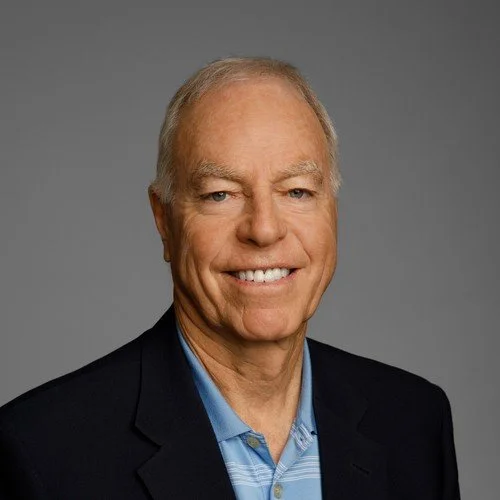
2026 Election Candidate
Environmental
A core principle of Vernon's Official Community Plan is to prevent sprawl and limit growth to within the urban containment boundary.
a) Under what conditions do you think Council should make an exception to this core principle?
b) Please give local examples of existing 'good' and 'not good' building development in Vernon, and explain why.
a.The short answer is very seldom. The longer answer is: when all of the best information available to council at the time of making the decision indicates that the negatives of deviating from our community plan, are outweighed by the benefits of doing so.
I personally feel that the OCP, is an essential guiding document for how we achieve our goals and make decisions for our community.
To spend that time, money and effort in order to wisely plan where we will go as a community, and then ignore or deviate from it, is illogical….at best.
b.I think that the steady improvement in density that is occurring in our more central areas or core is definitely “good”. I see many more duplexes, four plexes, and renovations of older east hill houses, as examples of where we should be going in increasing density and community efficiency. A prime example of “not good” would have been the 580 Commonage Road proposal that 3 members of our current council supported. It was in clear contravention of our OCP, and the Life Cycle Cost analysis showed what a significant financial burden it would have been in perpetuity.
Vernon has a Climate Action Plan (CAP) that aims to reduce GHG emissions in transportation, buildings and waste, and prepare for climate impacts like wildfires, heat domes, floods, severe weather events.
a) What aspects of this plan are most important and urgent and how will you ensure implementation?
b) The CAP will undergo a review process in 2027. What would you like to see in a revised CAP?
a.My understanding is that land use planning is the most important tool of local city government in dealing with GHG emissions. Our OCP goal of increasing density, and increasing active transport options and transit, are clear and effective present tools that I will support and promote. We can’t erase the sprawling past nature of our community, but we can work diligently to make it better.
b.I would like to see a renewed emphasis from our Federal government, with the cooperation of our provincial government, on tackling climate change. Mr Carney has a history of commitment to climate action but international events have essentially erased any useful national legislation, like effective levels of carbon taxation, that would encourage substantive changes that we could support and promote at our local level.
We would benefit mightily from economically driven reductions in the use of fossil fuels in our transportation, industry and homes. Design and climate mitigation and adaptation could be promoted effectively with supportive senior policy and financial signals and assistance to improve the efficacy of our CAP, instead of working in opposition to our goals.
Do you support the use of public funds to contribute to acquiring natural lands for environmental conservation purposes? Under what conditions would the perceived need for more housing, businesses, roads and other infrastructure prompt you to trade away natural lands with high ecological value for urban expansion?
I feel that parks, green-space, and recreation and natural lands are an essential component of how we make our community attractive and liveable. And that should be a primary goal of our council, and one of the ways in which we invest to make our community better.
Vernon has a Master Parks Plan that must be reviewed and updated regularly. Environmental and natural lands should be a part of that parks land inventory and planning. Wise input and planning in the development of our OCP, Official Transportation Plan, and our Parks Plan will give us the answers in almost all situations, so that council is not reduced to ad hoc decisions.
Good councils make good policy. They don’t do work. Administrations do work.
Good councils should plan in ways that lay out the roadmap for how to deal with these questions and situations. Poor councils persist in constant ad hoc decisions.
I will work to help our council be a really good council.
Our water reservoirs are at critically low levels. No longer can we count on having the water resources we enjoyed even a few years ago. Drought, contamination, increasing demand are just some of the water issues. What actions would you prioritise to protect our creeks, lakes, aquifers, and groundwater for home and agricultural water sources, habitat for fish and wildlife, and human recreation?
Climate change has affected the predictability of our snow pack and precipitation. The good news is that we are much bigger per capita users of water than European countries. So, we have lots of opportunity to reduce our water usage and still live full and happy lives. Agriculture is by far our biggest single user of water and the toolkit that we can create by looking at the tools of other water short areas, will include more reclaimed water usage, and volumetric pricing to encourage all users, residential, industrial, and especially ag., to make choices that reduces our consumption to more normal world levels. We should also investigate whether managing our most critical resource with an independent public utility, would assist in better management. I told the head of the Okanagan Basin Water Board 15 years ago that I thought that water could become the most important single issue in the valley. There wasn’t a political will to make the necessary changes over those years. I believe that there is now a strong will and I will work to make those changes that will then result in the protection of our water dependent environments as our supply is more secure.
Social
What personal and/or professional experience has most shaped your understanding of Truth and Reconciliation, and how would it influence your decisions as a municipal elected official?
I have worked for the Mental Health Review Board for the the last six years. Part of our training was a series of presentations from the aboriginal community to help us understand Truth and Reconciliation. I will say that I was raised in northeast Saskatchewan, in the midst of 3 reserves. The tragedy and unfairness of the aboriginal experience was taught to us as children by our school teacher mother. I won my first public speaking contests in grade 7 speaking on that exact issue. My personal recognition and support of our nation’s need to address what was done, has always been fundamental to my belief and actions about what is fair, and right, and those beliefs are always part of what guides my decisions. When I was elected mayor in 2011, I directed the resumption of regular meetings and dialogue with OKIB, our community neighbours, that had been discontinued under the previous mayor. I would continue that approach guided by my beliefs in fairness and correcting wrongs if possible.
What is one action the municipality should take to strengthen our local food system and improve access to healthy, affordable food? Why that action?
I think the most effective action would be to secure our water supply for the long term. We are the most arid, and hot part of Canada, and climate change has revealed the weaknesses of our present system. Agriculture with irrigation is our biggest user of water, so making the appropriate choices to secure our supply for the long term would have the single most prominent effect on our food supply. Our aridity and heat mean that growing food requires irrigation in our valley, thus the importance of that action.
What is one specific change you would make to better support local non-profits, and do you have personal experience (e.g. volunteer, board member, staff, and/or passion for a specific issue) that informs that action? Please include one brief example.
I was a member of Ribbons of Green Trails Society for 8 years and president for 4 years. As a result, I made several advocacy presentations to our local councils. I was a member of the board of Turning Points Collaborative non profit organization for 7 years, and saw the phenomenal growth of various types of housing programs and in house substance abuse programs that it provided. The collaboration of Turning Points with other non profits and the Social Planning Council, and the City of Vernon, were the reason why the province told attendees at the annual UBCM convention a couple of years ago that Vernon was the provincial model for how to collaborate to provide those services. I also was serving as president of another local non profit until I signed my nomination papers for this election. Our present council has members who have not been nearly as supportive as the community deserves. Providing services for problems doesn’t cause those problems. The apathy and lack of support of some of the present council members is a major reason why I am running and my presence on council is a change I hope to make.
Should the municipality continue to secure and provide land for affordable housing projects? Why or why not? If yes, how would you handle any neighbourhood concerns brought forward to Council?
Many other countries are dealing with providing affordable housing. Our toolkit should include looking at what works and doesn’t work in other countries. Some of those tools are transferrable to Canada and some aren’t. Clearly, providing land can assist those entities in Vernon that are trying to build affordable housing that is so desperately needed by many levels of society, including our young people, and families. It isn’t only those with substance abuse problems who need housing.
Providing available land is one of the few tools the CoV can use.The provincial Community Charter, under which we operate, severely limits the things local government can do for this problem that directly affects us the most. Housing is a constitutional responsibility of the Federal government, with obvious practical needs for provincial government to act, but local government suffers the effects the most, and we have the fewest tools. Issues with any housing projects should be dealt with by our usual development planning process which may include a public hearing. We should understand that a neighbourhood and community is always better with everyone safely housed.
Cultural
Vernon does not have a dedicated public art policy to guide how public art is selected, funded, maintained, or removed, while regional cultural direction sits with the RDNO through the Greater Vernon Cultural Plan. Do you support developing a public art policy for Vernon, and how would you coordinate the City's role with the Plan?
I think that it is the primary role of a council to develop well thought out and researched, public policy on community issues. Thus, I was one of the persons thanked for my support of the Greater Vernon Cultural Plan that was adopted in 2016. That plan was the result of input from all components of our cultural and arts community with 30 representatives involved. It is a an in depth guiding plan for our Greater Vernon Arts and Culture development.
A Vernon specific public art policy in order to give our citizens more direct control, is an issue that should be determined by seeking public input, expert and peer advice and experience, and council discussion. Coordinating the City’s role in the plan would involve public input, expert advice and historical and professional research. A community committee of those with expertise would be needed to administer the policy under the direction of council.Our governance model includes not just the City of Vernon but often our community neighbours in Coldstream, and Electoral areas B & C on sub regional issues, if they are participants. So, those factors would determine the levels and nature of the coordination discussion.
With more than 75 arts and culture groups active in the region, how would you work to remove barriers and strengthen City partnerships so that public spaces and facilities are accessible and equipped for community programming and gatherings?
That large number of organizations demonstrates the diversity of components that make up our community cultural mosaic. Existence of community committees for input are an essential way to for council to receive local information on ideas, wants, and needs of our arts and cultural organizations. Council needs that information and interaction in order to understand and respond with policy that effects positive results.
I will always support coherent, collaborative, community led efforts to improve Vernon, with the full understanding that spending in one area, virtually always means something else very worthwhile can’t be funded.
Michael Bloomberg, an ex mayor of New York, said it best, when he said that the worst part of municipal government was having to say “no.”
I wish for a world where we can always say “yes”, but that is not a reality if we are to be responsible stewards of our citizen’s money.
Arts and culture help shape who we are as a community. As Vernon continues to grow, how do you see our identity changing, and what kinds of arts and culture initiatives would you support to strengthen that future?
As I have said previously, my vision for the community does not include us being a grey field industrial city. Yes, industry, and agriculture will continue to be a part of the diversity and stability of our economy and identity, but our real niche is as a smaller, mediterranean-like city, with 4 seasons, phenomenal natural environment and recreation opportunities, and proximity to a university and an international airport. If we can build an attractive community with further densification and neighbourhood services, and walking, cycling, and parks and green space, and recreation facilities, arts and culture opportunities will be an important component of that which makes us attractive, and encourages people to make Vernon their home.
Those who have expertise and knowledge about providing strengthening initiatives will be the source of information and guidance for me in our council decision making. Many of those decisions will be difficult, and many will be easy, and a pleasure.
Artists make up as much as 12% of the North Okanagan population and the sector generates over $126 million in direct economic activity and $46 million in GDP, how will you strengthen the role arts and culture play in our local economy, tourism, and community wellbeing?
I am well aware that arts and culture are not only part of the fabric of our community that contributes to our happiness and satisfaction, but also contributes to the economy.
I hope my previous answers will suffice for this question.
Economic
The business tax base is critical to the provision of services at the municipal level. How would you support business retention and expansion in the City of Vernon?
I believe that within the powers of local government in BC, we have two main avenues to assist business. One is to make our regulatory processes, which are designed to protect us all, as efficient and cost effective as possible. The other is to have a vision of how to make our community as attractive as possible to those who can choose where they work and live. If we don’t have that vision, and don’t work toward providing lifestyle amenities and community design, like parks and active transport, that makes us attractive, and maximizes our assets, which include proximity to an international airport and a university campus, and year round world class outdoor recreation, other communities that do those things will “eat our economic lunch.” I will try to work with council toward that vision so that we build a community that is “sticky” enough to make people want to stay, and work and raise their families here.
Finding employees has consistently been identified as a top challenge by Vernon businesses in the City of Vernon Business Walks surveys. How should the City support businesses in meeting their workforce needs?
I believe that working toward the vision I have elucidated in Q1., and supporting the provision of more housing, to which I already spoke, will be the primary, most effective ways to support businesses in Vernon. The largest part of any economy is always the service sector. Components of the service sector especially need more affordable housing, but all people need less expensive housing and an attractive, liveable, community as I have described above.
What role does the City have with supporting growth-oriented sectors like manufacturing and agricultural processing?
I believe that the issues and responses to questions 1. 2. and 3. in this section are interrelated. It is important that people understand that local governments in BC cannot give preferential tax breaks, cannot run a deficit, and don’t receive a dedicated share of sales taxes or income tax.
Those limitations protect the public from poor policy but limit our available tools to apply to problems.
Local governments in BC can’t go bankrupt, unlike communities in the US.
I think we all recognize that a strong local economy is an essential driver of all of the goals we have for our community. That is why the City has an economic development office dedicated to helping business succeed in Vernon, whether that is a manufacturing business or an agricultural processor. That function should have the full support of council.
Considering the recent water and fire crisis, how should the City assist businesses to become more resilient to future risk?
Fire smarting our communities and securing our water supply are the two most fundamental and effective ways local government can assist.
The City can also assist by providing positive tourism messaging (e.g. mitigating the negative environmental smoke messages ), show that we take climate change seriously and are taking steps to mitigate excess heat and poor air quality, and work together with Greater Vernon Water to assist business in using less water or using water more efficiently, and planning for emergencies. The City already funds and maintains the ESS (Emergency Support Services) program that has provided essential services in recent fires and evacuations.The City can support with emergency planning, provisions, fire fighters, and coordinate wildland firefighters, for example.
Health
As Mayor / Councilor, how would you work to attract and retain medical professionals in Vernon?
As a physician in New Brunswick, South Carolina and Vernon, I served on physician recruitment committees. We learned that the two most important factors were: the attractiveness of our medical community to the physician,: and the attractiveness of the general community to their partner. A good congenial, well supplied local medical working situation usually makes attracting the physician easy. The hard part is attracting their partner, and the vision, and the work that makes our community as attractive as possible to those who can chose where the work and live, becomes paramount. When I was interviewing at multiple places for my residency, I learned about the “chicken coop theory”. The theory says, that if you can have people in the community for several years during training, they tend to stay when “freed” at graduation. The wisdom of that has already been applied by the Collaborative efforts of CoV, Community Futures, and others. to provide housing to medical students and residents and I applaud it. I will work with council on the other issues I have previously identified.
If elected, what specific actions would you take within the authority of your municipal office to improve access to in-person mental health supports and services in our community, and how would you work with other levels of government to strengthen support for those services?
My experience of family practice and the Mental Health Review Board have ensured that I am fully aware of the importance and need for the provision of mental health services. I think that specific knowledge and commitment is the essential and primary need to ensure that our elected officials work toward improving the local provision of services. It must be done in collaboration with the professionals in the field who can identify needs and opportunities. Clearly senior levels of government have the responsibility, but the reality of the situation has resulted in downloading to local government, without legislated tools. So, we must consult and collaborate with the provincial government with our best ideas and projects. I think my experience in medicine, and in local government lends itself well to that role.
How will you ensure that our planning of our built environment, our programs and our policies are accessible, and support the physical and mental health needs of our population?
I feel that evidence shows the importance of the qualities of our built environment in supporting the provision of accessible programs that contribute to the best physical and mental health. For 20 years, the World Happiness Report has shown that the happiest people are in countries which best provide the community design, facilities and programs that further and support physical and mental health. Those countries are always Scandinavian and northern European countries that aren’t the wealthiest, but have governments and programs, facilities and community design, that citizens feel work to achieve those goals.
If the goal of government isn’t to achieve the best possible happiness for its citizens, what is it?
Mental and physical health are documentable markers for that achievement.
Thus my repeated commitment to the vision to work toward building the kind of community that tries to provide those things, and a community that then is attractive to those who can choose where they work and live. They are virtually the same thing.
What would you do to support the physical and mental health of members of our community against the effects of climate change, especially those who are most vulnerable?
Climate change adaptation need is a reality. In our environment, the models are for more instability and extremes, with less snow, and continuation of the trend to higher temperatures.
The risks of fire, flood, and drought, and heat effects are increasing. Fire and flood mitigation efforts must continue. Among other things, that includes building our infrastructure to cope with the extremes of rain and runoff, and securing our water supply. We can help with best practices designs to provide public cooling facilities, and ensure that our provincial and local building codes work toward those stated goals.
Good, well informed policy trumps ad hoc, stop gap, measures, and I will always work to encourage council to function in a wise, thoughtful, well informed manner to best achieve those goals. When we don’t know the best programs, techniques, and policies, we should work hard to access that knowledge. I think my career in medicine, where one must always know how to find the best answers to issues, and my experience in local government, will help me contribute to those efforts.
