
David Scarlatescu
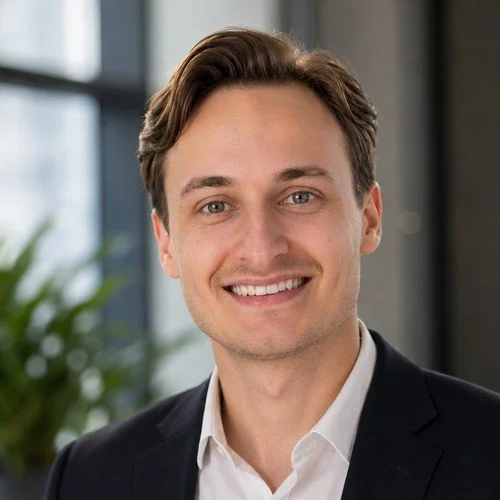
2026 Election Candidate
Environmental
A core principle of Vernon's Official Community Plan is to prevent sprawl and limit growth to within the urban containment boundary.
a) Under what conditions do you think Council should make an exception to this core principle?
b) Please give local examples of existing 'good' and 'not good' building development in Vernon, and explain why.
(a) Exceptions should be rare, and only when a project clears a real bar: it pays for itself over its full lifecycle without straining city finances, our infrastructure and water capacity can actually support it, and it delivers a genuine benefit infill alone can't provide. Any project of real scale deserves a full public hearing before council decides, not after. Growth that outpaces what we can service isn't smart growth, it's a future problem with someone else's name on it.
(b) A good example is the Pleasant Valley Road affordable housing project, 25 homes built through a partnership between BC Housing and the Okanagan Village Housing Society, a board I served on. It's good infill: built on already-serviced land, meeting a real need, without expanding our footprint.
A not-good example is the North End site at 5000 24th Street. In 2017, a developer abandoned a 119-unit seniors project at the foundation stage, leaving it fenced off as an eyesore for nearly a decade, only now moving forward again. That's a promised benefit that sat unbuilt for years instead of helping anyone.
Vernon has a Climate Action Plan (CAP) that aims to reduce GHG emissions in transportation, buildings and waste, and prepare for climate impacts like wildfires, heat domes, floods, severe weather events.
a) What aspects of this plan are most important and urgent and how will you ensure implementation?
b) The CAP will undergo a review process in 2027. What would you like to see in a revised CAP?
(a) The most urgent thing this plan reveals isn't in the targets, it's in the results: the city's own emissions dropped 7.5% since 2017, but community-wide emissions rose 6.3% over the same window, despite an existing Retrofit Assist program and a completed outreach strategy. The real gap is reach and follow-through, not another new tool. I'd also push to finally resolve Vernon's stalled tree bylaw and prioritize wildfire and water resilience given what we're already living through. To ensure implementation, I want outcomes tracked publicly, not just program activity.
(b) The 2027 review needs to close two real gaps. First, the current roadmap only gets Vernon about two-thirds of the way to the 2050 net-zero target, so the revised plan needs a credible path for the rest, not restated ambition. Second, it doesn't address consumption-based emissions, the footprint of what we actually buy, a real gap given how much impact happens off the books. I'd also want the plan to lean harder into what's already shown to work, like densifying around the core, rather than treating it as one option among many.
Do you support the use of public funds to contribute to acquiring natural lands for environmental conservation purposes? Under what conditions would the perceived need for more housing, businesses, roads and other infrastructure prompt you to trade away natural lands with high ecological value for urban expansion?
Yes, I support public funds contributing to conservation acquisition, especially structured as partnerships, cost-shared with provincial, federal, or private conservation groups, rather than the city carrying it alone. That's how most of these purchases actually get done elsewhere in BC, and Vernon already holds at least one conservation property this way, the Clerke Nature Reserve downtown.
On trading ecologically valuable land for development, I'd set a high, specific bar: only when a genuine, demonstrated need can't reasonably be met elsewhere, when an honest alternative-sites review has actually happened first, not after a project's already designed, and when ecological value gets assessed on its own terms rather than folded quietly into a general cost-benefit calculation. This region has already lost the large majority of its natural grasslands and wetlands over the past century. That history should weigh heavily on any decision like this, not get treated as a footnote.
Our water reservoirs are at critically low levels. No longer can we count on having the water resources we enjoyed even a few years ago. Drought, contamination, increasing demand are just some of the water issues. What actions would you prioritise to protect our creeks, lakes, aquifers, and groundwater for home and agricultural water sources, habitat for fish and wildlife, and human recreation?
I'd prioritize three things. First, back the precautionary approach RDNO directors already took this summer, declining new wells into the Coldstream aquifer once a study found a real connection to Kalamalka Lake's water levels. That has to be the default instinct, not a one-time exception, while still taking seriously that agricultural users are also suffering real losses under 70% reduction targets, this is about protecting a shared resource, not picking a side against farmers. Second, fully fund and complete the regional groundwater study already underway for the Coldstream Valley, so decisions rest on real data, not guesswork. Third, properly resource the existing Kalamalka Lake and Coldstream Creek watershed protection plan, since that creek and its groundwater supply 80% of the lake's inflow, protecting it protects drinking water, fish habitat, and recreation together, not one at the expense of the others.
Social
What personal and/or professional experience has most shaped your understanding of Truth and Reconciliation, and how would it influence your decisions as a municipal elected official?
The most direct experience has come through both of my businesses. The Fig has worked directly with the Okanagan Indian Band, the nation whose territory Vernon sits on, and during wildfire season we provided free food to hundreds of evacuees staying on OKIB land. MVP Creative has worked directly with Splatsin as well. Those relationships came from actually showing up and doing the work, not from a land acknowledgment read at the start of a meeting. My sister-in-law is also Indigenous, from Manitoba, which has made these conversations part of my own family, not just something I've observed from a distance.
What that's taught me is that reconciliation isn't a single policy or a one-time gesture, it's sustained relationship. As a councillor, that means actually engaging OKIB directly on decisions that touch their territory and interests, before a decision is already shaped, not after, and treating that relationship as ongoing work, not something to revisit only when it's politically visible to do so.
What is one action the municipality should take to strengthen our local food system and improve access to healthy, affordable food? Why that action?
One action: formal municipal support for a food recovery program, connecting surplus food from local restaurants, grocers, and producers to the organizations already doing this work, like Land to Table and Upper Room Mission, rather than leaving it to informal, ad hoc effort.
Why this one: Vernon doesn't actually lack food security organizations, it has a real network already, Land to Table, FASNO, local food banks, community gardens. What it lacks is coordination and consistent infrastructure connecting good, edible food to people who need it before it's wasted. I know this firsthand, not from a report, but from actually doing it. I've donated soup to the Upper Room Mission, partnered with Give Luck to distribute food to families in need, and run a seniors meal program out of The Fig for years. The organizations exist. What they need is a municipal partner that takes coordination seriously, not just another new program competing for the same donors and volunteers.
What is one specific change you would make to better support local non-profits, and do you have personal experience (e.g. volunteer, board member, staff, and/or passion for a specific issue) that informs that action? Please include one brief example.
One specific change: extend the same simplified, multi-year renewal the City already gives to places of worship, private schools, and hospitals, to all eligible non-profits applying for permissive tax exemptions. Right now, most non-profits still have to submit a full application every single year, while those few categories only need a short annual confirmation within a five-year cycle. That's real volunteer and staff time spent on repetitive paperwork instead of actual programming.
I've seen this firsthand serving on the boards of Downtown Vernon Association, Funtastic Sports Society, and the Okanagan Village Housing Society. Even well-run organizations spend real hours every year reapplying for things that haven't meaningfully changed, and that time is genuinely scarce when most of the people doing it are volunteers fitting it in around their own jobs and families.
Should the municipality continue to secure and provide land for affordable housing projects? Why or why not? If yes, how would you handle any neighbourhood concerns brought forward to Council?
Yes. Pleasant Valley Road, a BC Housing and Okanagan Village Housing Society partnership I served on the board for, built 25 homes for families, seniors, and people with disabilities because the city made land available. With roughly 200 people experiencing homelessness in Vernon nightly, and low income the top driver, this isn't optional.
On neighbourhood concerns: I take them seriously, not as something to manage away. Residents near My Place and The Crossings raised real safety concerns after supportive housing projects clustered in one area, a fair planning lesson. On city-secured land, council has real say over placement, and I'd favour spreading projects across neighbourhoods rather than concentrating them. I'd also be upfront that BC Housing doesn't need municipal approval for every project, so our real leverage is how we use our own land, not vetoing decisions that aren't ours to make.
Cultural
Vernon does not have a dedicated public art policy to guide how public art is selected, funded, maintained, or removed, while regional cultural direction sits with the RDNO through the Greater Vernon Cultural Plan. Do you support developing a public art policy for Vernon, and how would you coordinate the City's role with the Plan?
Yes, I support developing a Vernon-specific public art policy, but it should fill the actual gap, not duplicate what already exists. RDNO already has a Greater Vernon Public Art Policy covering regional cultural institutions like the art gallery and museum. What's missing is a clear, City-level policy for public art on Vernon's own property, parks, streetscapes, and municipal buildings, how it gets selected, funded, maintained, and eventually removed.
On coordination: the City's policy should explicitly reference and align with the existing Greater Vernon Cultural Plan rather than operating in isolation, with clear lines on which spaces and budgets fall under City versus RDNO responsibility. Given that resident input became a real point of contention with the Cultural Centre's funding, I'd also want genuine public consultation built into the City's policy from the start, not added after decisions are already made.
With more than 75 arts and culture groups active in the region, how would you work to remove barriers and strengthen City partnerships so that public spaces and facilities are accessible and equipped for community programming and gatherings?
With more than 70 active arts and culture groups here, I think the barrier isn't interest or even facility availability, it's practical cost and complexity. Right now, booking outdoor City-managed spaces requires $2 million in liability insurance naming three separate government bodies, up to $5 million depending on scale, plus a 20% non-refundable deposit at the time of booking. That's a serious burden for a small, volunteer-run group, very different from what a large commercial event organizer can absorb.
I'd push to review whether that insurance threshold and deposit structure actually fit a small community gathering the same way they fit a large commercial event, since right now they don't appear to be scaled to the size or risk of the event. I'd also want a single, clear point of coordination between City and RDNO-managed facilities, so groups aren't navigating two separate systems depending on which specific space they want, real friction for organizers who are already mostly volunteers stretched thin.
Arts and culture help shape who we are as a community. As Vernon continues to grow, how do you see our identity changing, and what kinds of arts and culture initiatives would you support to strengthen that future?
Vernon's identity has always been tied to this valley, the orchards, lakes, and ranching history that shaped this place long before it became somewhere people move to. As Vernon grows, I don't want that story to fade under new development, I want it told more, not less. That's part of why I'm working on a docuseries called Vernon: The Orchard City, recently approved through TELUS STORYHIVE, documenting that heritage while it's still within living memory.
Going forward, I'd support initiatives that actively document and tell Vernon's story, local storytelling, oral history projects, and genuine partnership with the cultural voices who were here long before any of us, the Okanagan Indian Band and Splatsin among them. Growth should add new chapters to that story, immigration, new businesses, new ideas, not erase the ones that came before. The arts and culture groups already doing that work are the ones who should shape it, the City's role is to back them, not direct them.
Artists make up as much as 12% of the North Okanagan population and the sector generates over $126 million in direct economic activity and $46 million in GDP, how will you strengthen the role arts and culture play in our local economy, tourism, and community wellbeing?
Roughly 12% of this region identifies as artists, and that's genuine economic activity, not a hobby sector. I see this from the inside too, MVP Creative is part of that creative economy myself.
The clearest lever I'd support: treating arts and culture as actual economic development, not a budget line competing against "real" priorities. That means integrating arts and culture directly into tourism marketing rather than promoting them separately, and leaning into the upcoming Greater Vernon Cultural Centre as the genuine tourism draw it's projected to be, over 60,000 visitors a year expected. On wellbeing specifically, I'd want City support prioritized toward programs with real public access built in, not just funding institutions, so seniors, youth, and lower-income residents can actually participate, not just visit occasionally.
Economic
The business tax base is critical to the provision of services at the municipal level. How would you support business retention and expansion in the City of Vernon?
As someone who's run a small business downtown for nearly a decade and chaired the Downtown Vernon Association's Business Development Committee, I see this as more than a policy question.
Two concrete things I'd prioritize: make sure the city's existing revitalization tax exemption programs for the City Centre District and Waterfront areas are actually well known and used, not sitting as a tool most business owners don't even realize exists. And finish the digital permitting rollout the city already started this year, slow, paper-based approvals cost real time and money whether someone's building housing or opening a storefront.
I'd also want council mindful of how much of the tax burden businesses carry relative to residents, since a business tax base that climbs faster than services improve pushes businesses toward neighbouring communities instead of keeping them here. Retention isn't abstract to me, it's whether the businesses on my own street are still there in five years.
Finding employees has consistently been identified as a top challenge by Vernon businesses in the City of Vernon Business Walks surveys. How should the City support businesses in meeting their workforce needs?
This is something I live, not just read about, staffing a restaurant is one of the hardest sectors to hire for, and I feel this challenge directly every week.
The real root of it is structural: Vernon's workforce participation rate sits around 52%, and our working-age population is growing slower than our retirement-age population. That's exactly why youth retention has to be central to this, not a separate issue, if we don't give young people real reasons to stay and build a life here, the workforce gap only widens regardless of what else we do.
Two concrete things: Vernon lost its federal immigration pilot program last year, which had been a genuine pathway for local businesses to access workers for roles they couldn't fill locally, and I think the City should actively pursue a successor program rather than letting that door just stay closed. And housing specifically for workers needs to be part of the affordability conversation too, businesses can't hire people who can't afford to live anywhere near their job.
What role does the City have with supporting growth-oriented sectors like manufacturing and agricultural processing?
Vernon's numbers show how real this already is: roughly 100 manufacturing firms employing over 1,500 people, about 9% of our workforce, plus 14 local food-processing firms built directly on our agricultural base, Okanagan Spirits, Helmut's Sausage Kitchen, and Davison Orchards among them. This isn't a hypothetical growth sector, it's already here and already employing people.
The City's real role is land, infrastructure, and speed. That means making sure enough properly zoned industrial and agricultural processing land actually exists and is genuinely serviced with the power, water, and access these businesses need, not just zoned on paper. It also means finishing the permitting improvements already underway, so a food processor or manufacturer isn't waiting months for approvals that should take weeks. I'd want Vernon's economic development team actively promoting what we already have, including the emerging aviation manufacturing activity at the airport, rather than competing on vague promises instead of our actual strengths.
Considering the recent water and fire crisis, how should the City assist businesses to become more resilient to future risk?
I lived this firsthand. During the Bradley Creek wildfire, The Fig became a relief hub, feeding evacuees and firefighters, so this isn't abstract for me.
Something genuinely new worth building on: Community Futures North Okanagan just launched an Economic Disaster Response Program last month for businesses hit by wildfire and water scarcity, working capital loans, payroll help, and remediation cost support. The City should be actively promoting this so every affected business actually knows it exists, not finding out by word of mouth after the fact.
I'd also want more businesses aware of and signed up for the City's existing ESS Supplier program, which lets businesses offering food or accommodations formally partner with Emergency Support Services ahead of time, rather than scrambling to figure that out mid-crisis the way we did. And given what Stage 3 restrictions have meant for water-dependent businesses like mine, water efficiency support specifically for businesses, not just the existing residential program, deserves real attention too.
Health
As Mayor / Councilor, how would you work to attract and retain medical professionals in Vernon?
Doctor and healthcare worker shortages are real, but recruitment and healthcare delivery is a provincial and Health Authority responsibility, not something a councillor hires or funds. I'd rather be honest about that than pretend council runs recruitment itself.
What's real: Vernon is actually named specifically in the province's Team BC program recruiting American health professionals right now, alongside Vancouver, Richmond, and Powell River. The City's genuine role is making sure Vernon competes well once someone's considering us, real support finding housing, since that's the same barrier affecting every profession we're trying to attract, and a welcoming, responsive experience for anyone relocating here. I'd also want the City actively supporting local efforts already underway, like Community Futures North Okanagan's push for a community health clinic, rather than leaving that work entirely to others. Doctors and nurses choose where to live based on community as much as salary, and that part is squarely within what a councillor can actually influence.
If elected, what specific actions would you take within the authority of your municipal office to improve access to in-person mental health supports and services in our community, and how would you work with other levels of government to strengthen support for those services?
Vernon already has something genuinely working, and I'd rather build on it than reinvent it. Since 2023, the Integrated Crisis Response Team has paired an RCMP officer with an Interior Health mental health nurse, and the results are real: mental health occurrences dropped nearly 38% in the most recent quarter, and hospital wait times for mental health admissions are now averaging under an hour.
Specifically within council's authority: this team runs limited daily hours, and since council already funds RCMP positions directly, I'd push to expand that funding so coverage matches actual demand rather than a fixed schedule. I'd also make sure Vernon keeps using tools like HealthIM, the screening app just expanded here this year, so officers respond better even outside the dedicated team's hours.
On other levels of government: this only works because Interior Health and the RCMP partnered directly, and I'd keep pushing that partnership further, funding our side properly and advocating provincially for more in-person counseling and mental health capacity generally, since getting someone through a crisis safely isn't the same as getting them real ongoing care afterward.
How will you ensure that our planning of our built environment, our programs and our policies are accessible, and support the physical and mental health needs of our population?
Accessibility has to be designed in from the start, not retrofitted after complaints pile up. A concrete example already on the record: Vernon's own Business Walks survey found semi-trucks parking overnight on 25th Avenue have been blocking entrances and limiting disability access. That's a fixable, known problem, and fixing it would show accessibility is a working priority, not just language in a plan.
More broadly, I want every major planning and infrastructure decision to ask the accessibility question upfront, sidewalks, curb cuts, building access, not as an afterthought bolted on when someone complains. Physical and mental health are connected too: walkable neighbourhoods, real green space, and places where people actually run into each other reduce isolation, which matters as much as a ramp or an elevator does.
On programs specifically, I'd build on what's already working, like Vernon's mental health crisis response partnership with Interior Health, and make sure policy decisions get real input from people who actually live with accessibility barriers daily, not just accessibility reviewed as a checkbox after a design is already finalized.
What would you do to support the physical and mental health of members of our community against the effects of climate change, especially those who are most vulnerable?
Vernon already opens cooling centres during extreme heat, and that's genuinely good groundwork. But this summer exposed a real gap: during one of the hottest stretches, the Recreation Centre's own air handling system struggled, the very cooling infrastructure people were counting on. I'd want that actually audited and fixed before the next heat event, not just nominally maintained.
The other real gap: many seniors don't qualify for the province's free AC program and can't afford one themselves, which is exactly why NexusBC just launched a donation drive for portable units. This is personal for me, I started a seniors meal program during COVID out of concern for my own grandparents, and I'd want the City actively supporting efforts like this rather than leaving it entirely to charity.
On mental health, isolation is often the hidden risk during heat and smoke events, seniors living alone, unhoused residents avoiding public spaces. I'd want real outreach and check-ins built into emergency response, since a cooling centre only helps people who know about it and can actually get there.
