
Diana Wilson
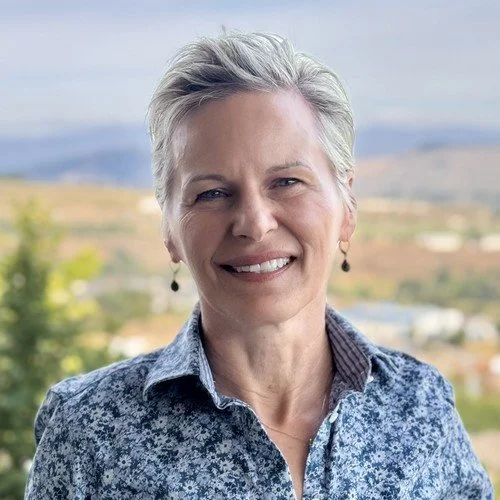
2026 Election Candidate
Environmental
A core principle of Vernon's Official Community Plan is to prevent sprawl and limit growth to within the urban containment boundary.
a) Under what conditions do you think Council should make an exception to this core principle?
b) Please give local examples of existing 'good' and 'not good' building development in Vernon, and explain why.
Vernon’s Official Community Plan reflects extensive community input, and I believe its urban containment boundary should be respected. Exceptions should be rare and demonstrate a compelling community benefit, with careful consideration of water, infrastructure, environmental impacts and long-term costs to taxpayers.
The proposed 580 Commonage development is an example of growth I did not support. It was outside the urban containment boundary and would have required significant new infrastructure and services—contrary to the direction established in the OCP.
The proposed Via District is a more positive example. While still in the early planning stages, and with legitimate questions around traffic flow and building height to address, its location and higher-density, mixed-use approach are much better aligned with the OCP’s vision for accommodating growth within existing urban areas.
We need more housing, but where and how we build it matters.
Vernon has a Climate Action Plan (CAP) that aims to reduce GHG emissions in transportation, buildings and waste, and prepare for climate impacts like wildfires, heat domes, floods, severe weather events.
a) What aspects of this plan are most important and urgent and how will you ensure implementation?
b) The CAP will undergo a review process in 2027. What would you like to see in a revised CAP?
For me, one of the most urgent priorities is better community engagement and education.
Residents need to know the CAP exists, understand what we're doing to implement it, see our progress and, importantly, understand what they can practically do themselves. That's particularly important because most of Vernon's community-wide emissions come from the community rather than City operations.
There is good work to build on: resiliency workshops, sustainability grants, EV education, youth programs and Retrofit Assist. The City is also exploring a Climate Engagement Center that could connect residents with information, programs and resources. I would like to make education and engagement a more visible part of implementing the CAP.
For the 2027 review, I would like to see clear priorities, realistic costs and resource requirements, measurable targets and regular public reporting.
The revised plan should also clearly identify what the City can control, where partnerships are needed, and where education and incentives can help residents and businesses take action.
Do you support the use of public funds to contribute to acquiring natural lands for environmental conservation purposes? Under what conditions would the perceived need for more housing, businesses, roads and other infrastructure prompt you to trade away natural lands with high ecological value for urban expansion?
Yes, I support the strategic use of public funds to help protect natural lands of significant ecological value. But that doesn't mean the City should purchase every undeveloped property.
I would look at the ecological significance of the land, its importance to watersheds and wildlife corridors, the long-term community benefit, the cost, and opportunities to partner with other governments or conservation organizations.
I would also set a very high bar for converting land of high ecological value to urban development. Our first approach should be to accommodate housing and economic growth within our existing urban area and make efficient use of infrastructure we already have.
If development of ecologically significant land were proposed, I would want to know: Is there a compelling community need that can't reasonably be met elsewhere? What would be lost? Can the impacts realistically be mitigated? What are the water and infrastructure implications and long-term costs?
These decisions may involve difficult trade-offs, but once some natural assets are lost, they can be extremely difficult or impossible to replace. That needs to carry significant weight in the decision.
Our water reservoirs are at critically low levels. No longer can we count on having the water resources we enjoyed even a few years ago. Drought, contamination, increasing demand are just some of the water issues. What actions would you prioritise to protect our creeks, lakes, aquifers, and groundwater for home and agricultural water sources, habitat for fish and wildlife, and human recreation?
Water security is one of the most important long-term issues facing our community, and protecting our water sources has to be a priority.
I would focus on protecting watersheds and source-water areas, maintaining healthy creeks, lakes and aquifers, reducing contamination risks, and considering agricultural and environmental needs alongside residential demand.
We also need to make better use of the water we have by reducing system losses, conserving water, expanding reclaimed water use and investing strategically in infrastructure.
Greater Vernon Water's Water Capacity Study will help us understand current and future supply, the impacts of growth and climate change, and potential infrastructure needs.
Water availability also needs to be part of growth decisions. We shouldn't approve growth without understanding whether our water system can sustainably support it.
These are complex decisions requiring expertise in water management, agriculture, infrastructure and the environment. Council needs reliable data, an understanding of the trade-offs and a long-term view.
Social
What personal and/or professional experience has most shaped your understanding of Truth and Reconciliation, and how would it influence your decisions as a municipal elected official?
In 2022, I led a program of initiatives with the Ministry of Children and Family Development supporting B.C.’s A Pathway to Hope mental health and addictions strategy.
As part of that work, I spent time at the Maples Adolescent Treatment Centre, where Indigenous culture and perspectives were integrated into the environment and programming. I was introduced to aspects of Indigenous culture I had not experienced before and had the opportunity to participate in a morning drumming ceremony, which I found to be particularly moving.
My experience at the Maples strengthened my appreciation for Indigenous culture and the importance of respecting culture, identity and reinforced for me the importance of acknowledging and advancing Truth and Reconciliation.
As a municipal councilor, I would bring that respect to the City's relationship with the Syilx Okanagan people. I would listen, learn and seek to better understand their history, perspectives and priorities, while supporting ongoing relationships and meaningful engagement. Reconciliation requires respect, continued learning and relationships built over time.
What is one action the municipality should take to strengthen our local food system and improve access to healthy, affordable food? Why that action?
Food security isn't only about protecting farmland and growing food. We also need to make it easier for local producers to connect with residents and for residents to access healthy, locally produced food.
At a municipal level, we should focus on where we can make the biggest practical difference. One action I would support is exploring an evening or weekend farmers market to complement our existing weekday market.
Why? Because access matters. Weekday daytime hours can be difficult for people who work, while additional market opportunities could give more residents access to local food and provide producers with another opportunity to sell directly to the community.
I also support initiatives such as The Food Shed that are working to strengthen the infrastructure needed to store, distribute and connect locally produced food with our community.
The City can't solve food security on its own, but it can bring partners together, remove practical barriers, and use planning, economic development, City facilities and partnerships where they can make the greatest difference
What is one specific change you would make to better support local non-profits, and do you have personal experience (e.g. volunteer, board member, staff, and/or passion for a specific issue) that informs that action? Please include one brief example.
One specific change I would like to explore is providing local non-profits with better support to identify and access external grant opportunities. Vernon already provides several grant programs of its own. I would like to build on that by helping organizations identify provincial, federal, foundation and other funding opportunities, understand eligibility requirements and navigate the application process.
My experience as President of both the North Okanagan Cycling Society and Vernon Paddling Centre has shown me how important grants are to the success of community organizations.
At NOCS, we discovered the organization had inadvertently been registered under a designation that made us ineligible for certain major provincial funding programs. It showed me how easily volunteer-run organizations can miss opportunities simply because they lack the right information or expertise.
Providing practical grant navigation support could help local non-profits bring more outside funding into Vernon, build their capacity and strengthen the services they provide our community.
Should the municipality continue to secure and provide land for affordable housing projects? Why or why not? If yes, how would you handle any neighbourhood concerns brought forward to Council?
Yes. I believe the City should continue to identify and make appropriate land available for affordable and non-market housing.
Why? Because land costs can be a significant barrier to building affordable housing. Making suitable public land available can reduce costs, help non-profit housing providers leverage provincial and federal funding, and make projects more financially viable. It is one of the practical ways a municipality can directly help increase affordable housing.
There is already important work underway through the City's Housing Action Plan, Affordable Housing Advisory Committee and Non-Market Housing Land Task Force. I would build on this work and also like to see the City revisit its Attainable Housing Strategy, which dates back to 2007.
When neighborhood concerns arise, Council needs to listen. Issues such as traffic, parking, design and infrastructure should be considered and, where possible, addressed through good planning. Council must also balance those concerns with Vernon's need for affordable housing and the long-term interests of our community.
Cultural
Vernon does not have a dedicated public art policy to guide how public art is selected, funded, maintained, or removed, while regional cultural direction sits with the RDNO through the Greater Vernon Cultural Plan. Do you support developing a public art policy for Vernon, and how would you coordinate the City's role with the Plan?
Yes. I support developing a public art policy for Vernon. Public art contributes to a vibrant community, creates a sense of place and helps tell the stories of our community.
The policy should clearly define the City's role for public art on City-owned property, including how art is proposed and selected, how projects are funded, expectations for community and Indigenous engagement, and how maintenance, relocation or removal is handled.
I would like the policy to encourage opportunities to incorporate public art into parks, streetscapes and other public spaces. Community engagement should help identify where public art would add value and the stories, culture and character residents would like reflected.
I would support an inventory of existing City public art, including its condition and maintenance needs.
The policy should complement the RDNO's Greater Vernon Cultural Plan, with the City, RDNO, arts and cultural organizations, Indigenous partners and community representatives working together to identify shared priorities.
The result should be a practical policy that provides clear direction while creating more opportunities for art to become part of Vernon's public spaces.
With more than 75 arts and culture groups active in the region, how would you work to remove barriers and strengthen City partnerships so that public spaces and facilities are accessible and equipped for community programming and gatherings?
I would work through the structures and partnerships already in place rather than create something new. The Arts Council of the North Okanagan (ACNO) and the Greater Vernon Cultural Plan Implementation Advisory/Action Team (IAT) can help identify common barriers and priorities across our many arts and culture organizations.
From there, I would focus on practical barriers such as rental costs, insurance, permitting and booking processes, as well as whether public spaces have the accessibility, power, washrooms, storage and other infrastructure groups need.
The new Greater Vernon Cultural Centre will also provide an important regional hub for programming, performances and gatherings. I would want to ensure we take full advantage of that investment while continuing to make existing City and regional spaces easier for community groups to access.
This is a regional effort. Vernon should work collaboratively with the RDNO, ACNO, the IAT and cultural organizations to identify the biggest gaps and focus our resources where they can make the greatest practical difference.
Arts and culture help shape who we are as a community. As Vernon continues to grow, how do you see our identity changing, and what kinds of arts and culture initiatives would you support to strengthen that future?
I know what I would like Vernon's identity to be as we grow: a strong, vibrant community where local businesses thrive, our downtown is a place people want to be, and we remain connected to our history and natural environment.
I see the Greater Vernon Cultural Centre as an important part of that future—a gathering place that brings people downtown, celebrates our history and creativity, and creates opportunities for performances, exhibitions, learning and community connection.
I strongly support arts and cultural initiatives that help tell the broader story of Vernon; our agricultural roots, history and culture, and the importance of our lakes, hillsides, wetlands and natural spaces. Arts and culture can also be powerful ways to engage people in conversations about climate resilience and the kind of community we want as Vernon grows.
I would also like to see opportunities for young people to participate and contribute their ideas and creativity.
My hope is that arts and culture create awareness, connection and excitement about Vernon's future, and inspire all of us to play a role in making it an even better place to live.
Artists make up as much as 12% of the North Okanagan population and the sector generates over $126 million in direct economic activity and $46 million in GDP, how will you strengthen the role arts and culture play in our local economy, tourism, and community wellbeing?
The new Greater Vernon Cultural Centre presents a significant opportunity to bring more people downtown for exhibitions, performances, events and gatherings. As a councillor, I would support opportunities to better connect this investment with downtown businesses, restaurants, festivals and Tourism Vernon so the economic benefits extend beyond the Centre.
I would support the City working through existing organizations such as the Arts Council, RDNO and Cultural Plan Implementation Advisory/Action Team to help remove barriers that make it difficult for artists and cultural organizations to use public spaces, hold events and access funding.
I would also advocate for a clear public art policy that provides direction for Vernon's investment in public art and creates opportunities to showcase local artists.
Most importantly, arts and culture should be considered in the City's work on economic development, tourism, downtown revitalization and community wellbeing—not treated as something separate.
Economic
The business tax base is critical to the provision of services at the municipal level. How would you support business retention and expansion in the City of Vernon?
Business retention and expansion needs to be a priority for Council. When existing businesses succeed and grow, they create jobs, strengthen our economy and help grow the commercial and industrial tax base that supports municipal services.
I would focus on making Vernon easier to do business with by continuing to improve development and permitting processes, providing clear and timely information, and identifying unnecessary barriers to expansion.
We also need to protect our commercial and industrial land base, use it efficiently, and understand whether land, servicing or infrastructure are limiting business growth.
The City's new Business Retention and Expansion partnership with Community Futures provides an opportunity to work directly with existing businesses to identify barriers to growth and expansion. I would want Council to understand what we are learning from that work, identify the issues the City can influence, and ensure there is practical follow-through.
Business retention is about listening to our businesses, removing barriers where we can, and creating the conditions that allow them to invest and grow in Vernon.
Finding employees has consistently been identified as a top challenge by Vernon businesses in the City of Vernon Business Walks surveys. How should the City support businesses in meeting their workforce needs?
One of the biggest challenges I have learned about through this campaign is finding and retaining workers. That includes skilled trades and professionals, but also workers needed in restaurants, retail, tourism and other service industries. When businesses can't find staff, they may reduce hours, turn away business or put expansion plans on hold.
Attracting and retaining workers means making Vernon a place where people can build a career and a life. Housing availability and affordability are critical, along with childcare, transportation, training opportunities and the quality of life that attracts young people, families and newcomers.
I would support regular workforce discussions bringing together employers, Okanagan College, the Chamber, Community Futures and other partners to identify where shortages are greatest and what can realistically be addressed locally.
Council's role is to understand those barriers and ensure municipal decisions about housing, transportation, economic development and community amenities support our ability to attract and retain the workforce local businesses need.
What role does the City have with supporting growth-oriented sectors like manufacturing and agricultural processing?
The City's role is to create the conditions that allow growth-oriented sectors such as manufacturing and agricultural processing to invest and expand in Vernon.
Vernon already has a diverse manufacturing sector. I would focus on helping existing manufacturers grow by protecting industrial land, ensuring infrastructure and servicing can support expansion, maintaining efficient permitting processes, and understanding the barriers businesses are experiencing. We should also work with economic development partners to identify opportunities for new investment that complement our existing industries.
Agricultural processing has many of the same needs, but water security and connections to local producers are particularly important. I support ongoing engagement with farmers and processors so their perspectives inform decisions about water, land use and infrastructure.
For both sectors, Council's role is to listen to businesses and producers, address barriers within the City's control, work with regional and economic development partners, and ensure our planning and infrastructure support long-term economic growth.
Considering the recent water and fire crisis, how should the City assist businesses to become more resilient to future risk?
This summer demonstrated how quickly drought, water shortages and wildfire can affect local businesses. I think the first step should be to learn from what happened.
I would support the City bringing businesses, the Chamber, Community Futures, emergency management and other partners together to identify where businesses experienced the greatest challenges and what we can do differently.
From there, I would focus on practical actions: helping businesses develop continuity and emergency plans; improving emergency communications; and identifying sectors particularly vulnerable to water shortages, wildfire or evacuation.
For water-dependent businesses, agriculture and food processing, the City needs to work with Greater Vernon Water and industry to understand future water needs and explore conservation, reuse and infrastructure options.
The goal is to learn from this summer and help businesses prepare before the next emergency.
Health
As Mayor / Councilor, how would you work to attract and retain medical professionals in Vernon?
Health care is primarily a provincial responsibility, but the City can play an important role in advocating for our community and helping make Vernon a place where medical professionals want to build their careers and lives.
I would start by ensuring we understand the true need. The Province uses the Health Connect Registry, along with other information, to understand demand for primary care. If residents without a family doctor aren't registering because they don't believe it will make a difference, we may not have a complete picture. I would support working with health partners to better understand the data and encourage residents who need a primary-care provider to register.
Council can use that information to advocate with Interior Health and the Province for the resources our community needs.
Locally, I would build on existing physician-recruitment efforts and understand the barriers to attracting and retaining medical professionals. Housing, opportunities for spouses and families, training and quality of life can all be factors.
The City's role is to understand what we can influence locally, work with health-care partners and advocate for Vernon's needs.
If elected, what specific actions would you take within the authority of your municipal office to improve access to in-person mental health supports and services in our community, and how would you work with other levels of government to strengthen support for those services?
Mental health services are primarily a provincial responsibility, but the City has an important role in advocacy, partnerships and community planning.
I would want to understand what work has already been done to identify gaps in mental health and substance-use services in Vernon, what recommendations have been made, what has been addressed and what remains unresolved. I would also want to understand what local service providers and Interior Health are seeing today.
From there, Council can determine where the City has a role and where we need to advocate collectively with Interior Health and the Province for additional services or resources.
Within municipal authority, Council can support community organizations through grants, partnerships and access to facilities, and ensure our community-safety approaches help connect people with appropriate services.
My focus would be on building on the work already done, strengthening coordination and ensuring Vernon's needs are clearly represented to the governments responsible for providing these services.
How will you ensure that our planning of our built environment, our programs and our policies are accessible, and support the physical and mental health needs of our population?
I don't believe Council should determine accessibility or health needs on its own. We need to rely on experts, people with lived experience, provincial standards and the North Okanagan Accessibility Plan developed by the RDNO.
As a councillor, I would want accessibility considered from the beginning when we plan streets, sidewalks, parks, facilities, transportation and public spaces—not added after something has been designed.
I would support accessibility audits for City projects and continued input from the Regional Accessibility Committee and people who experience barriers.
Our built environment can also support physical and mental wellbeing. Safe walking and cycling, access to parks, recreation and nature, and welcoming public spaces that help people connect all contribute to a healthier community and can reduce social isolation.
The same lens should apply to City programs and policies: who may face barriers, what do experts and people with lived experience tell us, and what practical changes can we make?
Council's role is to build accessibility and wellbeing into our decisions.
What would you do to support the physical and mental health of members of our community against the effects of climate change, especially those who are most vulnerable?
Climate change affects everyone, but not everyone has the same ability to prepare for extreme heat, wildfire smoke, drought or other emergencies.
Following the recent wildfire, I would support a review of our emergency response to understand what worked, where there were challenges and what we can learn to better protect residents, particularly those most vulnerable, during future emergencies.
I would also support exploring an accessible community resilience hub where residents could get practical information about emergency preparedness, cooling locations, wildfire smoke, water conservation and available programs.
We can't rely only on people finding information online. We need to work with seniors' organizations, housing providers, social-service agencies, Interior Health and others to reach people who may be isolated, have mobility challenges, limited incomes or lack access to technology.
We should also build on cooling locations, resiliency workshops and emergency alerts.
Climate resilience is about physical safety, mental wellbeing and social connection. Our goal should be to ensure people know where to go, what resources are available and how to get help when needed.
