
Dawn Tucker
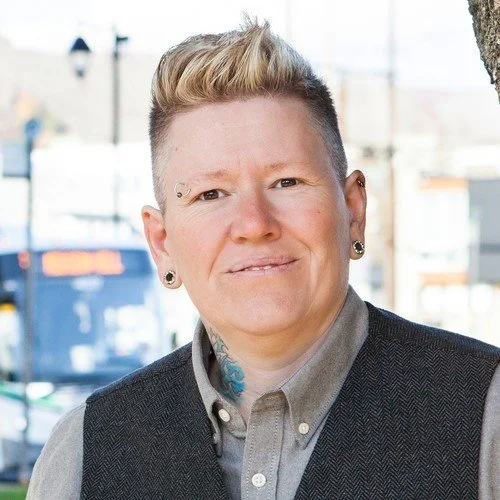
2026 Election Candidate
Environmental
A core principle of Vernon's Official Community Plan is to prevent sprawl and limit growth to within the urban containment boundary.
a) Under what conditions do you think Council should make an exception to this core principle?
b) Please give local examples of existing 'good' and 'not good' building development in Vernon, and explain why.
a) Rarely, and only when the numbers work. Vernon already maintains 462 km of sanitary and storm pipe, almost twice as much per resident as Kelowna and more than three times per resident as Vancouver. Every extension outward adds costs taxpayers carry forever. I'd only consider an exception if a project fully pays its own infrastructure costs, avoids high-value ecological land and wildfire interface, and delivers something we genuinely can't build inside the boundary. I opposed the 580 Commonage proposal on exactly these grounds.
b) Good: Alexis Park, where small-scale infill is replacing older homes close to transit, services and downtown, using pipe we already maintain. Also good: council's unanimous vote requiring a protection plan for the great blue heron nesting site on 20th Street before any building permit.
Not good: council continuing to approve affordable developments outside the current transit network, leaving the residents who most need affordable housing to choose between a home they can afford and transit they can rely on. Growth and transit planning must happen together.
Vernon has a Climate Action Plan (CAP) that aims to reduce GHG emissions in transportation, buildings and waste, and prepare for climate impacts like wildfires, heat domes, floods, severe weather events.
a) What aspects of this plan are most important and urgent and how will you ensure implementation?
b) The CAP will undergo a review process in 2027. What would you like to see in a revised CAP?
a) Wildfire readiness, water, and the tree canopy. This summer's Bradley Creek fire and Stage 3 restrictions made that clear. I'd push to finally bring back the stalled tree bylaw, keep improving Trees for Tomorrow, and work directly with residents on FireSmart and real emergency preparedness: block captains, building captains and practice drills, especially for downtown seniors without easy app access. On implementation: I've attended almost every council meeting since 2017, so I know how plans stall. I'll ask for public progress reports with dates and dollars, and keep asking until items move.
b) A revised CAP should extend beyond City Hall's own operations into the community, with measurable targets and annual public reporting. I'd add water security as a core pillar: stormwater, septic-to-sewer conversions, and permanent reclaimed water expansion, not just the temporary approval to 2028 as well as looking at development approval tied to proven water capacity rather than assumed capacity. Plus grants for resident-driven improvements, with provincial and federal funding pursued before property taxes.
Do you support the use of public funds to contribute to acquiring natural lands for environmental conservation purposes? Under what conditions would the perceived need for more housing, businesses, roads and other infrastructure prompt you to trade away natural lands with high ecological value for urban expansion?
Yes, with conditions. Public dollars for conservation should leverage partners (land trusts, provincial and federal programs, fundraising) and come with a management plan, so we're not buying land we can't care for. It's the same asset-management principle I apply everywhere: know what we have and fund its upkeep.
On trading away high-value natural lands, my bar is very high. We have room to grow inside the urban containment boundary through infill and missing-middle housing, and sprawl costs more in pipes, roads and services than it brings in. I've pushed for protection before: the great blue heron nesting grounds on 20th Street, native cactus and the lava-flow feature at Becker Park during pump-track construction, and keeping the 580 Commonage proposal outside our growth plans. Housing is urgent, but sacrificing ecologically valuable land is almost never the only option, and I'd need to see that proven first.
Our water reservoirs are at critically low levels. No longer can we count on having the water resources we enjoyed even a few years ago. Drought, contamination, increasing demand are just some of the water issues. What actions would you prioritise to protect our creeks, lakes, aquifers, and groundwater for home and agricultural water sources, habitat for fish and wildlife, and human recreation?
First, finish the job on sewer and stormwater. Stormwater is the number one factor affecting our lake water quality, and City testing has confirmed septic pollution in ditches in older neighbourhoods like Okanagan Landing. I want fair terms and incentives to connect those areas, plus investment in ditch and stormwater infrastructure.
Second, make reclaimed water permanent. I pushed for years to expand it; this July the Province approved expanded use only until September 2028. Sports fields, parks and agricultural users should be on reclaimed water permanently so drinking water goes further.
Third, real timelines on storage. Reservoir capacity was flagged in RDNO's 2012 Master Water Plan and is still at the study stage. Seat at the RDNO table or not, I'll push for public deadlines.
I've also raised MacKay Reservoir contamination risk to Bolter's Creek. Protecting source water means acting before a crisis, not during one.
Social
What personal and/or professional experience has most shaped your understanding of Truth and Reconciliation, and how would it influence your decisions as a municipal elected official?
Two things have shaped my understanding most: attending and teaching in School District #22 , and watching how Vernon handles reconciliation from the council gallery since 2017.
Land acknowledgments are the bare minimum, not the standard. The Okanagan Indian Band flag wasn't raised at City Hall until September 2024: a good step, but overdue. Civic Memorial Park, one of our newest parks, was named without acknowledging the band, despite the chance for a Syilx name, and promised native-planting signage has, to my knowledge, never appeared. Meanwhile, Okanagan College gave its new Vernon student housing a Syilx name in partnership with OKIB. It can be done here when it's prioritized.
As a councillor, I'd push for the Syilx Okanagan Nation to have a real place at the table on land use, naming and development, with input before decisions, not a courtesy call after. That standard should apply to every City project, including the Active Living Centre and new cultural centre, with consultation made visible to the public.
What is one action the municipality should take to strengthen our local food system and improve access to healthy, affordable food? Why that action?
Make expanded reclaimed water use permanent for local agricultural users.
Why: this summer's historic drought and Stage 3 restrictions showed how fragile local food production is when water runs short. Farms that can't irrigate can't grow, and every local crop lost is replaced by food trucked in at higher cost. The Province approved expanded reclaimed water use this July, but only until September 2028. Growers can't plan a season, let alone invest, on a temporary permit.
Other countries already use reclaimed water on farmland at scale, and Vernon has the supply. Securing it long-term keeps local producers growing, supports the farm stands and markets residents rely on, and eases pressure on our drinking water at the same time. One action that strengthens food security, water security and our local economy together.
I also helped change the City's bylaw in 2019 to allow backyard beekeeping, because pollinators matter to every local grower.
What is one specific change you would make to better support local non-profits, and do you have personal experience (e.g. volunteer, board member, staff, and/or passion for a specific issue) that informs that action? Please include one brief example.
I would like provide small operational funding from the city to a number of nonprofits so that they can leverage that into provincial and federal grants among others. Even five to ten thousand dollars can mean a nonprofit can obtain tens of thousands of dollars from other grants but they must have operational funding first. This is supported by my experience working along side a number of nonprofits struggling to obtain grants and finding it difficult to get the funding they need because they can’t apply for the grants that would make a huge difference to their nonprofit and thus to the community. I’ve heard this from a number of nonprofits. I hope this can be changed.
Should the municipality continue to secure and provide land for affordable housing projects? Why or why not? If yes, how would you handle any neighbourhood concerns brought forward to Council?
Yes, and the City should use land it already owns, faster. The Hesperia Lands have sat in City inventory since 2007; council only recently moved to rezone the northern portion for 200-260 units, after an earlier co-op housing allocation stalled. Vernon has just one housing co-op, and City land could change that. Since 2022 I've called for an inventory of City-owned lots suitable for housing, like the one we keep for commercial and industrial land. I'd also keep the affordable housing reserve (about $527,500) topped up, alongside BC Housing and CMHC dollars.
On neighbourhood concerns: hear them early and go to residents when possible to see what they are speaking about. Good design often solves many parking, traffic and density worries. But "not here" can't mean "nowhere." People who need affordable homes are our neighbours too. And the best way to allieviate concerns is to ensure residents are fully heard and see if there’s a solution or compromise to be had.
Cultural
Vernon does not have a dedicated public art policy to guide how public art is selected, funded, maintained, or removed, while regional cultural direction sits with the RDNO through the Greater Vernon Cultural Plan. Do you support developing a public art policy for Vernon, and how would you coordinate the City's role with the Plan?
Yes, and I've pushed for it for years. Vernon hasn't had a real Arts & Culture Policy since 2009. I co-organized the Sveva Caetani mural petition (1,659+ signatures) calling for a policy and an independent Public Art and Culture Advisory Committee. It's one of my Day One commitments.
We have 27 murals, one of Canada's largest outdoor public-art collections, with a maintenance fund of roughly $49,000. In 2025 a different artist was brought in to "touch up" Michelle Loughery's murals without her consent. Gabrielle Rice’s mosaic has not had proper repair work done on her piece in Cenotaph Par k either. And twice, it took Vernon Pride's advocacy to get a vandalized rainbow crosswalk repainted. That's what happens without policy. A good policy covers selection, funding, maintenance, artists' rights and removal, backed by a condition assessment and capital plan like any other City asset.
On the RDNO: the Greater Vernon Cultural Plan sets regional direction; a City policy should implement it locally for City-owned art and spaces, not duplicate it, and unlock grants instead of relying on general revenue.
With more than 75 arts and culture groups active in the region, how would you work to remove barriers and strengthen City partnerships so that public spaces and facilities are accessible and equipped for community programming and gatherings?
Make City spaces easier and cheaper to use than they are today. Many groups run on volunteers and small budgets; rental fees, insurance requirements and booking hoops can kill a program before it starts. I'd push for a clear, published fee-relief process beyond the current grant process for non-profits, one simple booking system with real-time availability, and a staff contact who helps groups navigate it.
Accessibility matters too. I've publicly raised concerns about accessibility in our newest public buildings. "Fully accessible" has to mean it in practice, for performers and audiences alike.
Facilities should be equipped for what groups actually do: basic sound, lighting, storage and power in parks and plazas, so outdoor gatherings don't mean renting everything.
And the City should ask. An annual roundtable with arts and culture groups, through the advisory committee I've called for, would surface barriers early. I've performed on Vernon stages and volunteered at the Towne Theatre; I know how much these groups give.
Arts and culture help shape who we are as a community. As Vernon continues to grow, how do you see our identity changing, and what kinds of arts and culture initiatives would you support to strengthen that future?
I've watched Vernon grow up around me; former students now raising their own kids here and meeting new residents daily. We're becoming more diverse, younger families are arriving, and our core is densifying. That's a chance to build an identity rooted in our history and open to everyone.
I'd support protecting what makes us distinctive (our murals, O'Keefe Ranch and heritage sites) through real funding plans and grants, not cuts or sales. There’s opportunities yet to be had in new festivals for art like a Vernon mural or art walk and existing ones like Sun Dog. I'd also back programming that reflects who's here now: Syilx artists and stories, events like Pride Week, and more for teens and young adults, so graduates don't feel they must leave to find culture.
I've been part of this myself, performing in Fiddler on the Roof and This Is Me! at the Powerhouse Theatre, narrating The Grinch at the Performing Arts Centre, and helping Vernon Pride's Queer Revue raise $6,300 for Pride Week. A growing city needs places where people actually meet. Arts and culture do that better than almost anything.
Artists make up as much as 12% of the North Okanagan population and the sector generates over $126 million in direct economic activity and $46 million in GDP, how will you strengthen the role arts and culture play in our local economy, tourism, and community wellbeing?
Treat arts and culture as the economic asset it is. We have an opportunity to create such things as our own cultural district building on the existing cultural corridor downtown. Murals draw visitors downtown, O'Keefe Ranch brings tourism, and performances fill restaurants and shops. Yet the mural maintenance fund is about $49,000, and O'Keefe Ranch's annual capital funding was cut from $50,000 to $10,000.
My approach is asset management: know what we have, assess its condition, fund its care, and chase provincial, federal and heritage grants instead of defaulting to property taxes. A formal Arts & Culture Policy and advisory committee would make Vernon competitive for that money.
I'd connect arts to business, too. I led Vernon Pride's move to join the Greater Vernon Chamber of Commerce in 2025. Working with tourism partners and the Downtown Vernon Association on mural tours, event marketing and downtown activation benefits artists and businesses alike.
A vibrant arts scene supports its wellbeing. It's part of why people choose to stay.
Economic
The business tax base is critical to the provision of services at the municipal level. How would you support business retention and expansion in the City of Vernon?
Start by not hurting the businesses we have. Capital projects are known well in advance so informing businesses as far out as possible they will be impacted by these projects is key so they can be informed and mitigating the amount of downtime and loss of access to their businesses so they don’t lose a crucial season which may cost them their store. Plus real accountability for contractors who damage infrastructure or leave a mess and city help to businesses or residents trying to access contractors insurance if this is the case.Protect downtown access. We've lost the Cultural Centre parking lot and the lot next to the Sveva Caetani mural; parking needs a real plan.
Communicate faster and clearer, with response-time standards and staffing in high-volume departments like planning.Retention means listening before a problem costs a business its doors. And we must become better at working with those who want to do businesses here, too many people are leaving because it’s cheaper to rent facilities or get permits or speak to staff. We need to continue to improve and find out why.
Finding employees has consistently been identified as a top challenge by Vernon businesses in the City of Vernon Business Walks surveys. How should the City support businesses in meeting their workforce needs?
Housing is workforce policy, prioritize infill & missing-middle housing close to jobs and transit. Keep skilled workers here. Okanagan College's Vernon campus housing, opened in 2024, supports trades & apprenticeship students as well as academic ones. Just as we support housing for medical residents to retain doctors, supporting trades-student housing keeps the workers our businesses need from leaving. I’ve seen many students graduate over the years with the first thought being to move away from Vernon. That needs to change. Instead of Vernon residents returning once they are married with kids we need to make it a place that’s attractive and affordable for young people to stay & to work in. Fix transit to jobs. Tying transit funding to ridership creates a chicken-and-egg problem: service can't grow without riders, & riders won't come without service. Council should push BC Transit & senior governments on that model, & stop approving growth outside the transit network. Welcome newcomers. Inclusive communities attract workers Business Walks tell us what employers need we also should hold stakeholder sessions with residents to find out what they need for the complete picture.
What role does the City have with supporting growth-oriented sectors like manufacturing and agricultural processing?
The City's role is to be a reliable partner: clear rules, timely approvals, working infrastructure and fair cost-sharing. Manufacturing and agricultural processing create stable, well-paying jobs and diversify our tax base.
Practical supports: serviced, ready industrial land; permanent reclaimed water access for processors and agricultural users; a planning department staffed to respond quickly; and procurement that values local firms, fair wages and accountability, not the lowest bid alone.
Support also has to be fair to residents. Since 2023 I've raised concerns about residential sewer rates rising to help pay for the high rate anaerobic digester, with repayment questions unanswered for years. I'm not against partnering with industry; I'm against residents quietly carrying the bill. Large users should pay the costs they create as the local government act requires, and agreements should be public.
Growth pays its fair share and everyone knows where the money goes. That's good for business and taxpayers.
Considering the recent water and fire crisis, how should the City assist businesses to become more resilient to future risk?
This summer showed how exposed businesses are: the Bradley Creek wildfire, historic drought and Stage 3 water restrictions.
Water security: make expanded reclaimed water use permanent (the current approval ends in 2028) and extend it to local businesses, and push RDNO for real timelines on reservoir storage stuck in study since 2012.
Emergency preparedness people can use: clear evacuation and communication plans, block and building captains, and a business contact network. During the 2021 White Rock Lake evacuations, the forums I co-admin became a coordination hub; the City should build that capacity formally.
Mitigation as ongoing work: resource FireSmart properly (fuel management near neighbourhoods, property assessments, thinning crews) and continue the flood mitigation Vernon has started. That protects businesses and creates steady local jobs.
Funding: pursue provincial and federal resilience grants and help businesses access them.
Resilience is cheaper than recovery.
Health
As Mayor / Councilor, how would you work to attract and retain medical professionals in Vernon?
Health care is provincial, but the City has real levers, and professionals choose communities, not just jobs.
Housing: keep supporting housing for the medical residency program, and help secure attainable rentals for new doctors and nurses. The same model works for other professions: Okanagan College's Vernon campus housing already supports trades students.
Space: remove zoning barriers so team-based clinics can locate near transit and downtown.
Partnership: work with Interior Health, the local Division of Family Practice and recruiters to show candidates what Vernon offers, and press the Province on staffing gaps. I've already done that: after a 98-year-old Vernon senior waited nearly two hours for an ambulance in 2023, I advocated directly to our MLA for more ambulance availability.
Community: an inclusive city with arts, recreation and things for families to do matters for retention. Spouses and kids need to want to stay too. I've lived here my whole life; I'd be a genuine ambassador.
If elected, what specific actions would you take within the authority of your municipal office to improve access to in-person mental health supports and services in our community, and how would you work with other levels of government to strengthen support for those services?
Within municipal authority, I'd focus on land, zoning and advocacy. The City can identify sites and remove zoning barriers for in-person mental health and addictions services, and prioritize them in its housing and land work. I'd push council to ask Interior Health and the Province directly, by motion and letter, what's missing locally and what they need from us, and to report back publicly.
I'd also support local actions that don't wait on other governments: well-lit, activated public spaces, a downtown ambassador program through the DVA, and better publicity for existing services so people know where to go.
With other governments: I've already written our MLA on ambulance availability and other provincial gaps, and I'll keep doing it. Council should work through UBCM to press for sustained, in-person funding here, not just in bigger centres.
As President of Vernon Pride, I know how much 2SLGBTQ+ youth rely on in-person, affirming supports.
How will you ensure that our planning of our built environment, our programs and our policies are accessible, and support the physical and mental health needs of our population?
Make "accessible" mean it in practice. The Vernon Cultural Centre, a regional building, carries a "fully accessible" designation despite a staircase-dominated design.An able bodied person and a mobility challenged person will not have an equal experience in that building. A label isn't enough, and I'll say so to regional partners.
Everyday details matter: plow berms that trap people using scooters and walkers near curb cuts and transit stops, multi-use paths not cleared as reliably as roads, and under-publicized programs like the City's 3-hour accessible parking permit.
I'd follow through on Vernon's Age- and Dementia-Friendly Community Plan, endorsed in June 2024, weaving its five directions into real decisions. That's personal: I cared for both my grandparents and helped care for my mother through Alzheimer's.
In planning: growth and transit planned together, infill near services so people can walk to what they need, safer public spaces with good lighting and sightlines, and parks open year-round. Lakeshore Park's gates are still locked all winter. Our community needs to be accessible to every resident no matter their abilities not just on paper but in practice.
What would you do to support the physical and mental health of members of our community against the effects of climate change, especially those who are most vulnerable?
Seniors living alone, people with disabilities, unhoused residents and outdoor workers face the worst of heat and smoke.
First, an emergency preparedness plan residents know how to use: block and building captains and practice drills, especially for downtown seniors without easy app or computer access. In a heat event, someone should be checking on neighbours.
Second, cooling and clean-air spaces that are open, accessible and well-publicized during heat and smoke events, with transportation for people who can't get there.
Third, grow the tree canopy. Shade saves lives in a heat dome. That means finally bringing back the stalled tree bylaw and strengthening Trees for Tomorrow.
Fourth, reach people where they are. The community forums I co-admin became lifelines during COVID and the 2021 wildfire evacuations. The City should build similar outreach networks with non-profits and outreach workers.
And pursue provincial and federal climate-adaptation funding to pay for it.
