
Wayne Carson
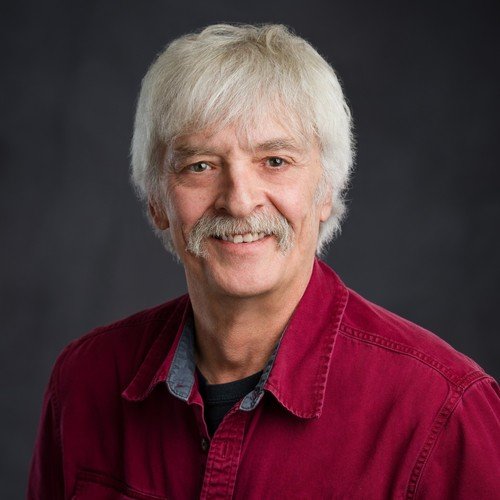
2026 Election Candidate
Environmental
A core principle of Vernon's Official Community Plan is to prevent sprawl and limit growth to within the urban containment boundary.
a) Under what conditions do you think Council should make an exception to this core principle?
b) Please give local examples of existing 'good' and 'not good' building development in Vernon, and explain why.
The Commonage development, over three thousand five hundred homes proposed on the hillside above Vernon. Council voted four to three not to send the Official Community Plan amendment bylaw to second reading and public hearing, effectively killing it. It was seen as good in that it got knocked back, since critics called it sprawl on a hillside without the infrastructure to support it.
Then there's the Silver Star Road townhome project, a hundred fifty two units. Vernon Mayor Victor Cumming called it a "classic leapfrog development", but council approved the boundary extension anyway. The irony people online pointed out is that the mayor's own leapfrog logic against that one is exactly the argument against Commonage too, so it looked inconsistent.
Vernon has a Climate Action Plan (CAP) that aims to reduce GHG emissions in transportation, buildings and waste, and prepare for climate impacts like wildfires, heat domes, floods, severe weather events.
a) What aspects of this plan are most important and urgent and how will you ensure implementation?
b) The CAP will undergo a review process in 2027. What would you like to see in a revised CAP?
A: buildings are the urgent piece, since a third of emissions come from heating systems locked in for decades, so retrofits need to start now, and implementation means council actually applying the plan's densification and transit goals when it votes on rezoning.
B: elevate wildfire and climate resilience into its own funded pillar, and tighten land use policy so sprawl can't get approved while still claiming alignment with the plan.
Do you support the use of public funds to contribute to acquiring natural lands for environmental conservation purposes? Under what conditions would the perceived need for more housing, businesses, roads and other infrastructure prompt you to trade away natural lands with high ecological value for urban expansion?
Yes, I support public funds for conservation acquisition. On trading natural lands for growth, I am opposed given Vernon's water reality, since Greater Vernon Water has been under historic Stage 3 restrictions with both water sources well below normal, and until that's resolved, ecological land shouldn't be sacrificed for expansion the water supply can't actually support.
Our water reservoirs are at critically low levels. No longer can we count on having the water resources we enjoyed even a few years ago. Drought, contamination, increasing demand are just some of the water issues. What actions would you prioritise to protect our creeks, lakes, aquifers, and groundwater for home and agricultural water sources, habitat for fish and wildlife, and human recreation?
Protect Kalamalka Lake first, since officials already turned down new wells into the Coldstream aquifer to keep the lake healthy, and back the push for a 50 percent use reduction there to avoid Stage 4 restrictions.
Support stream flow protection, like the order issued for Bessette Creek to protect salmon, as a model for our own creeks. And tie any new development approval to proven water capacity, full stop.
Social
What personal and/or professional experience has most shaped your understanding of Truth and Reconciliation, and how would it influence your decisions as a municipal elected official?
My experience as a fire chief working with Okanagan Indian Band, and as electoral area director working with Westbank First Nation, gives me real relationship building, not theory. That will shape my approach on council, treating consultation as an ongoing relationship and bringing First Nations in early on land use, water, and wildfire planning, the areas I've actually worked together on with them.
What is one action the municipality should take to strengthen our local food system and improve access to healthy, affordable food? Why that action?
Prioritize expanding local farmland access, like the agricultural park land near Vernon developed with the Okanagan Indian Band, which leases small plots to local growers for produce.
For wildfire, that same irrigated farmland doubles as a fuel break around the community, so growing local food and reducing wildfire risk reinforce each other.
What is one specific change you would make to better support local non-profits, and do you have personal experience (e.g. volunteer, board member, staff, and/or passion for a specific issue) that informs that action? Please include one brief example.
The specific change is simplifying grant and permit processes for nonprofits doing FireSmart and emergency preparedness work, since red tape often slows down exactly the groups doing the most hands-on prevention. As fire chief, I saw firsthand how volunteer FireSmart crews and community groups did critical fuel reduction and education work, and cutting bureaucratic friction for them means more wildfire protection actually gets done on the ground.
Should the municipality continue to secure and provide land for affordable housing projects? Why or why not? If yes, how would you handle any neighbourhood concerns brought forward to Council?
Yes, continue securing land for affordable housing, but any new site needs proven water capacity and FireSmart-compliant siting and construction, so we're not creating homes we can't protect or supply.
On neighborhood concerns, require genuine early consultation before council votes, addressing density, parking, and wildfire access directly rather than dismissing them.
Cultural
Vernon does not have a dedicated public art policy to guide how public art is selected, funded, maintained, or removed, while regional cultural direction sits with the RDNO through the Greater Vernon Cultural Plan. Do you support developing a public art policy for Vernon, and how would you coordinate the City's role with the Plan?
I would support a policy only if it's low cost and volunteer or grant driven, not a new tax burden, given everything else competing for funding right now like water and wildfire protection. Coordinate with the RDNO's Greater Vernon Cultural Plan so the city isn't duplicating effort or spending, just filling the specific gaps the regional plan doesn't cover.
With more than 75 arts and culture groups active in the region, how would you work to remove barriers and strengthen City partnerships so that public spaces and facilities are accessible and equipped for community programming and gatherings?
Streamline facility booking and reduce fees or red tape for those seventy five plus groups, so access, not paperwork, is the barrier they run into. Partner rather than duplicate, letting the city provide space and infrastructure while groups bring the programming, keeping costs down for everyone.
Arts and culture help shape who we are as a community. As Vernon continues to grow, how do you see our identity changing, and what kinds of arts and culture initiatives would you support to strengthen that future?
Streamline facility booking and reduce fees or red tape for those seventy-five plus groups, so access, not paperwork, is the barrier they run into. Partner rather than duplicate, letting the city provide space and infrastructure while groups bring the programming, keeping costs down for everyone.
Artists make up as much as 12% of the North Okanagan population and the sector generates over $126 million in direct economic activity and $46 million in GDP, how will you strengthen the role arts and culture play in our local economy, tourism, and community wellbeing?
Given that scale, I would treat arts and culture as real economic development, not just a nice-to-have, by promoting it alongside tourism marketing and supporting events that draw visitors and spending. Back initiatives with clear return, festivals, markets, tourism tie-ins, over ones that just add cost without strengthening that economic and community role.
Economic
The business tax base is critical to the provision of services at the municipal level. How would you support business retention and expansion in the City of Vernon?
I would support business retention and expansion by cutting permit and approval red tape, since speed and predictability matter as much as incentives to most businesses. Focus growth support on sectors tied to Vernon's real needs and assets, agriculture, tourism, and FireSmart and wildfire resilience services, since that's where local demand and jobs can actually grow together.
Finding employees has consistently been identified as a top challenge by Vernon businesses in the City of Vernon Business Walks surveys. How should the City support businesses in meeting their workforce needs?
We can support workforce needs by tackling housing and childcare access, since businesses can't hire if workers can't afford to live here or find care for their kids. Partner with the school district and college on trades and skills training pipelines, especially in areas like FireSmart, construction, and agriculture where local demand is steady
What role does the City have with supporting growth-oriented sectors like manufacturing and agricultural processing?
The city's role is removing barriers, faster permitting and zoning clarity for manufacturing and agricultural processing, not picking winners. Support processing capacity specifically, since it keeps more value from local farming here in Vernon rather than shipping raw product elsewhere.
Considering the recent water and fire crisis, how should the City assist businesses to become more resilient to future risk?
The City should help and support businesses assess and reduce their own wildfire exposure, extending FireSmart Priority Zone principles to commercial properties, not just homes, since a business that burns is a job loss too. Support water resilience planning alongside it, so commercial areas aren't caught flat-footed by the next drought or fire season like this last one.
Health
As Mayor / Councilor, how would you work to attract and retain medical professionals in Vernon?
Council needs to support housing options medical professionals can actually afford and access quickly, since that's consistently the biggest retention barrier for recruits. We need to back the hospital and health authority's own recruitment efforts with fast-tracked permitting for any housing or facility needs tied to bringing new professionals in.
If elected, what specific actions would you take within the authority of your municipal office to improve access to in-person mental health supports and services in our community, and how would you work with other levels of government to strengthen support for those services?
Within council's authority, prioritize land and infrastructure for health facilities and fast-track related permits and zoning, since that's the lever the city controls. Work with the health authority and province by advocating directly for Vernon's specific gaps, backed by clear local data, rather than leaving it to them to notice on their own. This is a file that Council needs to be clearly heard on, we’re a long way from Victoria.
How will you ensure that our planning of our built environment, our programs and our policies are accessible, and support the physical and mental health needs of our population?
Build accessibility in from the start, curb cuts, accessible transit, universal design in new facilities, rather than retrofitting after complaints. Support physical and mental health through green space, trails, and gathering places close to where people live.
What would you do to support the physical and mental health of members of our community against the effects of climate change, especially those who are most vulnerable?
Prioritize cooling centers, clean air spaces, and evacuation support for heat domes and wildfire smoke, targeted at seniors, low income residents, and others most exposed. Pair that with the FireSmart and structural sprinkler work, since protecting homes directly protects the people least able to relocate or rebuild after a disaster.
