
Steven Drapala
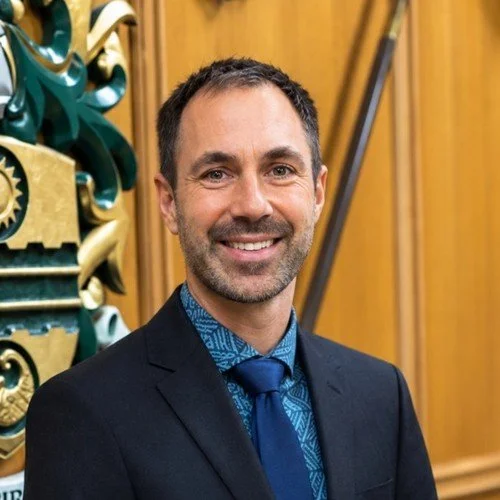
2026 Election Candidate
Environmental
Policies in the Armstrong Official Community Plan "direct future growth strategically to protect ecological and agricultural areas, offer more housing and transportation choices, support economic prosperity and diversity, prioritize sustainable municipal infrastructure planning, enhance community wellbeing, and support our transition to a more sustainable and climate resilient community." Please give local examples of 'good' and 'not good' building development in Armstrong, and state why. Do you support the downtown revitalization plan for Armstrong and why/why not?
don’t believe that viewing development as simply “good” or “not good” captures the complexity of a community. Development should be evaluated on multiple areas such as housing need, environmental impact, location, and long-term community benefit.
My priority is supporting development that provides rental or attainable housing while protecting high-value habitats within city limits, including riparian areas, wetlands, floodplains, and wildlife corridors. In my view, development that increases housing choice while respecting these environmental constraints is good development. Development that negatively impacts environmentally sensitive areas is not.
I support the downtown revitalization plan. I also acknowledge that the communication and consultation surrounding the project were not good. The infrastructure work needed to occur, and the goal of the revitalization is to create a vibrant downtown that supports community events and encourages residents and visitors to spend time and money in the area. Despite the shortcomings in consultation and communication, I believe the completed project will ultimately be a positive investment for the city and local businesses.
Armstrong has experienced significant climate impacts for the last few years. How do you propose to address these crises, both in preparing ahead for disasters like drought, wildfires, heat domes and floods, as well as reducing greenhouse gas (GHG) emissions that lead to climate change?
Over my past three terms on council, I have taken a balanced approach to climate change adaptation and reducing GHG emissions while remaining fiscally responsible to residents. Some may feel we can be more aggressive with these initiatives, but my approach has been that “a steady rain soaks in.”
For adaptation, we completed the Meighan Creek diversion to help address flood risks and are constructing another water storage reservoir to help mitigate drought. For over a decade, we have sold treated effluent to local farmers for irrigation and regularly participate in the Make Water Work campaign to promote water conservation. We have also opened cooling facilities during heat events and support a community FireSmart program.
To reduce GHG emissions, we have transitioned some municipal equipment to electric power, added two electric vehicles to the public works fleet, upgraded lighting in municipal buildings, and incorporated energy-efficient systems into City Hall.
Moving forward, I would expand EV charging infrastructure, continue fleet electrification, support active transportation, and explore solar power for municipal buildings.
Do you support the use of public funds to contribute to acquiring natural lands for environmental conservation purposes? Under what conditions would the perceived need for more housing, businesses, roads and other infrastructure prompt you to trade away natural lands with high ecological value for urban expansion?
I support the principle of using public funds to acquire natural lands for conservation purposes, provided those lands can also be enjoyed by the public. That being said, it is very difficult to pay market value for these properties with Armstrong’s small, primarily residential tax base. This does not mean it cannot be done, but it does require creative solutions. These could include partnering with non-profit organizations or incorporating land transfers of high-value habitat into development approvals, or in lieu of parkland contributions.
I am not in favour of expanding development at the expense of land with high ecological value. Riparian areas, wetlands, wildlife corridors, and sensitive ecosystems must be preserved. I would also extend this protection to known floodplains. The city has invested in identifying these areas, and we need to follow through on that work. As a society, we need to stop trying to “conquer” the natural world through innovation and instead learn to live within its limits.
Drought, contamination, increasing demand are just some of the water issues. What actions would you prioritise to protect our creeks, lakes, aquifers, and groundwater for home and agricultural water sources, habitat for fish and wildlife, and human recreation?
Water scarcity will be one of our greatest challenges in the future. Addressing it will require careful planning and courageous decision-making. It will also require strong relationships and collaboration with neighbouring jurisdictions because water does not start and stop at the Armstrong boundary.
Focusing on conservation, protecting natural ecosystems, and planning responsibly for future growth will help address these concerns. Priorities should include upgrading aging infrastructure to reduce leaks, encouraging drought-tolerant landscaping, maintaining year-round water restrictions, protecting riparian areas and wetlands, improving stormwater management, and reducing runoff.
Collaboration with our Indigenous neighbours and stewardship groups can help ensure decisions are based on shared watershed priorities so that everyone is working toward the same goals.
Social
In smaller communities we need to be creative in how we help one another; how do you see the role of local government in this?
In a small town, local government does not have the capacity to solve challenges alone. Local government needs to be a facilitator that brings people together and fosters the philosophy of neighbours helping neighbours. Strong communities are built on relationships and partnerships between residents, businesses, community organizations, volunteers, and local government.
On council, I will support this by creating opportunities for collaboration, reducing barriers and red tape where possible, and supporting projects that strengthen community connections. By working together, we can create made-in-Armstrong solutions that keep our community vibrant, connected, and welcoming.
How do we tackle misinformation and growing distrust in local government as well as uncivil behaviour on social media and in person?
his is a challenging issue to address. To start, it is no different from the relationships in our personal lives. Building trust takes time and is built through actions, not words. Transparency, consistent community engagement, effective communication, and respectful dialogue will be critical for the next council.
I believe we need to develop a referral process that involves interested local subject-matter experts in providing feedback on bylaws, policies, and plans before they are adopted by council. We also need to adapt our communication strategies to make it easier for residents to engage with city business before meetings, rather than only after decisions have been made. This could include publishing an “Agenda Express” that provides a brief summary of topics appearing on upcoming council agendas. It is not reasonable to expect residents to read full agendas to stay informed about city business.
There is not much local government can do to control behaviour on social media other than provide clear, timely information and lead by example. The vast majority of people online are respectful, but a small minority can dominate conversations and undermine civil discourse.
What personal and/or professional experience has most shaped your understanding of Truth and Reconciliation, and how would it influence your decisions as a municipal elected official?
My understanding of Truth and Reconciliation has been shaped through my work in School District 83. Throughout my career, I have had the opportunity to learn from Indigenous students, families, educators, local Bands, and community partners. I have learned that reconciliation is an ongoing commitment to listening, learning, building relationships, and acknowledging the lasting impacts of colonial policies on Indigenous peoples and communities.
Through this work, I have come to recognize the importance of approaching decisions with humility, a willingness to listen to perspectives that differ from my own, and an awareness of which voices may be missing from the conversation.
Being a member of council is a privileged position of leadership, and it is my responsibility to strengthen relationships with our Indigenous neighbours, support cultural awareness and education, and ensure Indigenous voices are present and considered in community planning and decision-making.
Cultural
How do you personally engage with arts, culture and heritage in Armstrong, and how do you think local government should support these features of our community?
Armstrong has a thriving arts and culture scene for a community of its size. I enjoy attending Music in the Park, organized by the Chamber of Commerce, attending productions at Asparagus Theatre, and visiting art shows at the Museum and Art Gallery.
The City needs to continue supporting the Visitor Centre, which works closely with the Chamber, as well as the Museum and Art Gallery. Like everything else, costs continue to increase, and local government needs to be prepared to increase funding proportionally so these organizations can continue their excellent work.
One challenge faced by Asparagus Theatre is the rigidity of the current booking system for rehearsal space. In addition, reducing rental rates for specialty spaces used for arts-related activities would help promote arts and culture in the community. The fee structure for Parks and Recreation programming could also be reviewed. These are all issues that council can address through the Parks and Recreation Commission.
Economic
What is your understanding of how small local governments can support our economic development, including the success of our small local businesses?
The City cannot create economic development on its own, but it can create the conditions in which local businesses and community organizations can thrive. One way is by maintaining business tax rates that are competitive regionally. The City can also create vibrant commercial areas by investing in beautification, walkability, and parking that support community events and encourage residents and visitors to spend time and money in these areas.
The City needs to reduce red tape and get out of the way of business owners who want to improve their buildings and operate creatively. The City should review its bylaws to reduce these barriers, and permitting processes should be straightforward and predictable. Local government has become too risk-averse and needs to return to an approach that is proportional to actual risk.
One of the most important drivers of economic development in Armstrong is our Chamber of Commerce. The City needs to maintain its support for the Chamber and continue fostering a relationship that has been strained at times over the past four years. That starts with the mayor, councillors, and staff recognizing and valuing the Chamber's contribution to our community.
What is one action the municipality should take to strengthen our local food system and improve access to healthy, affordable food? Why that action?
A resilient food system is important for both economic prosperity and community well-being. If I had to choose one action, it would be for the city to support and encourage the expansion of direct-to-consumer sales by local farmers and food producers, as well as food-sharing programs.
We are fortunate to live in a region where a great deal of food is grown and produced. We need to remove barriers that prevent food from moving directly from producers to consumers. Providing free access to city-owned land for markets or pop-up events is one practical way the city can support these initiatives.
Affordability is often outside the city's direct control, but these measures can help by reducing city-controlled costs, lowering transportation expenses, and providing greater flexibility for local sellers.
Health
As Mayor / Councilor, how would you work to support access to medical services?
The provision of health care is primarily a provincial responsibility, but there are actions the city can take to make Armstrong an attractive place for family doctors to establish a practice.
The Haugan Health Care Society has done great work for many years recruiting and retaining physicians in the community. The first step in supporting access to medical services would be to work with the Society to better understand its needs. If expanding its facilities is identified as a priority, grant-in-aid funding for capital projects would be a reasonable way for the city to support that effort.
How will you ensure that our planning of our built environment, our programs and our policies support the diverse physical and mental health needs of our population?
Health, well-being, and accessibility need to be embedded in all municipal decision-making rather than treated as separate issues. I would like to create a referral system within city processes that seeks feedback from pre-established interest groups on bylaws, policies, and developments that come before council.
Armstrong has a population that is engaged in the decision-making process, and we need to find better ways to include residents in it. Council and staff cannot be experts in everything, and that is okay, because we have a community full of people with valuable expertise. We simply need to ensure there are meaningful opportunities for them to contribute.
Council is elected to make decisions, but good decisions are made with people, not for people.
