
Mark Wehner
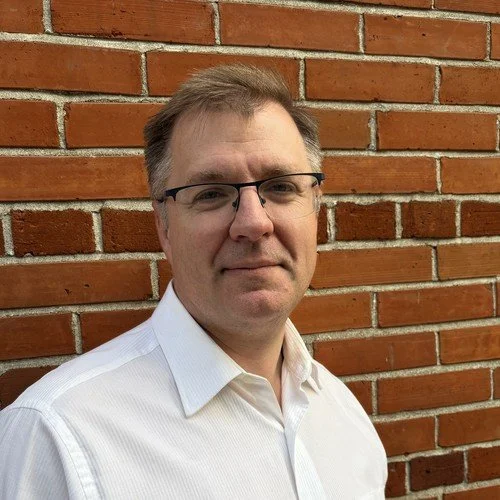
2026 Election Candidate
Environmental
Policies in the Armstrong Official Community Plan "direct future growth strategically to protect ecological and agricultural areas, offer more housing and transportation choices, support economic prosperity and diversity, prioritize sustainable municipal infrastructure planning, enhance community wellbeing, and support our transition to a more sustainable and climate resilient community." Please give local examples of 'good' and 'not good' building development in Armstrong, and state why. Do you support the downtown revitalization plan for Armstrong and why/why not?
With any development, there are trade-offs. I support the OCP’s approach of directing higher-density development toward the downtown core. Existing housing on Smith Drive, for example, is within walking distance of many of the services and amenities people need. This is a good example of locating housing where residents can access everyday needs without always relying on a vehicle.
I support downtown revitalization, but I do not believe the community has reached a consensus on exactly what that revitalization should look like. Commercial truck routes, parking, accessibility, bike lanes, community gathering spaces, patios, and preserving Armstrong’s historic character all compete for limited space, particularly in a downtown built around an active rail corridor.
The current portion of the CARI project is a good opportunity to learn from what worked well in the development process and what did not. We should use those lessons to help guide future phases of downtown revitalization.
Armstrong has experienced significant climate impacts for the last few years. How do you propose to address these crises, both in preparing ahead for disasters like drought, wildfires, heat domes and floods, as well as reducing greenhouse gas (GHG) emissions that lead to climate change?
Climate resilience requires both preparing for the impacts we are already experiencing and reducing emissions where it is practical to do so.
For drought, I support increasing our water reservoir capacity and strengthening water-wise programs. I am also interested in exploring sanitary water systems that could safely provide water for agricultural purposes.
For wildfire preparedness, I brought forward the FireSmart initiative, and the City was successful in receiving FireSmart funding. During extreme heat, I have supported City initiatives to provide cooling spaces.
For flooding, the City has completed floodplain mapping and uses that information in its planning. The City has also completed a bypass system to help manage high water levels.
To reduce emissions, I have supported our operations department’s purchase of battery-operated equipment and vehicles, as well as public charging stations. I will continue looking for practical opportunities to reduce emissions while strengthening Armstrong’s resilience to drought, wildfire, extreme heat, and flooding.
Do you support the use of public funds to contribute to acquiring natural lands for environmental conservation purposes? Under what conditions would the perceived need for more housing, businesses, roads and other infrastructure prompt you to trade away natural lands with high ecological value for urban expansion?
My research into conservation initiatives suggests there can be advantages to having societies or non-profit organizations hold environmentally sensitive lands. In some cases, this can provide greater long-term protection from changing municipal priorities.
However, I would not be opposed to the City acquiring land as a natural asset or green infrastructure where there is a clear environmental benefit, the land can be adequately protected over the long term, and the cost to taxpayers is reasonable.
When considering development of land with high ecological value, I would want the ecological impacts clearly identified before making a decision and would look first for alternatives that could meet our housing, business, transportation, or infrastructure needs without sacrificing those lands.
Drought, contamination, increasing demand are just some of the water issues. What actions would you prioritise to protect our creeks, lakes, aquifers, and groundwater for home and agricultural water sources, habitat for fish and wildlife, and human recreation?
Protecting our water sources requires paying close attention to activities throughout the watershed, not simply within City boundaries.
I watch proposed developments in drainage areas closely and support ensuring that appropriate riparian and environmental studies are completed. We have also recently approached the Province regarding mine exploration in our watershed. I intend to continue prioritizing this issue with the Province because protecting the watershed is important both for our drinking water and for the ecosystems that depend on it.
More broadly, I support planning that protects water quality and quantity while recognizing that our water resources serve households, agriculture, wildlife, and recreation.
Social
In smaller communities we need to be creative in how we help one another; how do you see the role of local government in this?
In a small community, local government can help create the conditions that allow people to connect and help one another. That means supporting community spaces and activities while avoiding unnecessary policies that create barriers between neighbours or discourage people from working through issues together.
The Armstrong I know and love is a community where people shovel a neighbour’s driveway simply because it needs doing, or drop off food when someone needs help. As community leaders, we should model and encourage those values.
How do we tackle misinformation and growing distrust in local government as well as uncivil behaviour on social media and in person?
I believe the best starting point for addressing misinformation, distrust, and uncivil behaviour is kindness, curiosity, and good information.
People see the world differently, and simply telling someone they are wrong rarely builds trust. What one person considers misinformation, another may sincerely believe is common sense. If we begin by assuming the other person has nothing worthwhile to say, meaningful conversation becomes very difficult.
Local government should communicate clearly, make information accessible, explain how and why decisions are made, correct inaccurate information with evidence, and remain willing to listen to people who disagree.
What personal and/or professional experience has most shaped your understanding of Truth and Reconciliation, and how would it influence your decisions as a municipal elected official?
Through my workplace, I have been fortunate to participate in a number of Indigenous cultural experiences. Sitting around a fire, listening to stories, and experiencing traditions different from my own made me think deeply about what it would mean for a child to be separated from their family, community, and culture.
While I was not personally responsible for the actions of previous generations, we live with their consequences, and many people continue to be affected by what happened to them, their families, and their communities.
Those experiences have reinforced for me the importance of listening, building relationships, and including affected communities in discussions before decisions are made.
Cultural
How do you personally engage with arts, culture and heritage in Armstrong, and how do you think local government should support these features of our community?
Arts, culture, and heritage help create the connections that make Armstrong a community rather than simply a place to live.
Over the years, I have attended many plays at Centennial Theatre. These productions are wonderful opportunities for people to come together and watch friends, neighbours, and family members perform on stage.
In my youth, I also served as the piper for our Remembrance Day ceremonies. That experience helped connect me with our community’s history and with the service and sacrifices commemorated on Remembrance Day.
Local government can support arts, culture, and heritage by maintaining welcoming community spaces, working with local organizations, and recognizing the important role these activities play in bringing people together and preserving Armstrong’s identity.
Economic
What is your understanding of how small local governments can support our economic development, including the success of our small local businesses?
Small local governments can support economic development by creating the conditions in which businesses can succeed. That includes clear and predictable bylaws, efficient processes, appropriate infrastructure, well-defined property rights, access to information, and a regulatory environment that supports fair competition while addressing impacts on neighbouring properties and the community.
Education, technology, and innovation are also important ingredients for long-term economic growth. While a municipality cannot control all of these factors, it can work with businesses, educational institutions, other governments, and community organizations to identify barriers and opportunities.
For Armstrong, I believe the goal should be a local government that is straightforward to work with, supports responsible investment and innovation, and recognizes the important contribution small businesses make to our community.
What is one action the municipality should take to strengthen our local food system and improve access to healthy, affordable food? Why that action?
One opportunity is to build partnerships with universities and other research organizations to explore innovative ways of producing food efficiently and sustainably.
Armstrong has historically had a strong relationship with the surrounding agricultural community, while land available for food production within City boundaries is limited. At the same time, initiatives such as the downtown community garden and the garden at AES demonstrate our community’s interest in local food.
Armstrong could build on that interest by becoming a willing partner for research, education, and demonstration projects that could ultimately benefit both residents and the surrounding agricultural community.
Health
As Mayor / Councilor, how would you work to support access to medical services?
While health-care delivery is primarily a provincial responsibility, local government can help address some of the practical barriers that make it difficult to recruit and retain medical professionals.
At this year’s UBCM convention, I heard from doctors and nurses about challenges such as finding housing for temporary or newly arriving medical professionals and accessing childcare. My research into childcare has also identified particular pressure on infant and toddler spaces, as well as challenges finding after-school care.
Armstrong’s OCP includes provisions intended to make it easier to establish childcare spaces throughout the community. I would also be open to examining the feasibility and cost of providing or facilitating medical office space and temporary housing for medical professionals.
We cannot replace the Province’s role in health care, but we can look for practical ways to make Armstrong an easier community in which health-care professionals can live and work.
How will you ensure that our planning of our built environment, our programs and our policies support the diverse physical and mental health needs of our population?
In my work with the school district, I regularly encounter questions about how decisions affect people with different needs. I try to approach those questions through an equity lens rather than assuming that treating everyone identically will always produce a fair result.
For municipal decisions, that means identifying who will be affected, involving relevant stakeholders, considering accessibility and different physical and mental health needs, and establishing a fair and transparent decision-making process.
I also believe it is important to examine decisions from more than one ethical perspective. We should consider the overall benefit to the community, but also questions of fairness, individual rights, accessibility, and whether the process itself is fair.
Good engagement does not guarantee that everyone will agree with the final decision, but it gives Council better information and helps ensure different needs are genuinely considered.
